Go-to-Market · July 6, 2026

If it feels like an ad, you've already lost them

When marketing sits on top of the product, it underperforms. The brands that win design belief as part of the product experience-message, UX, and proof as one system.

If it feels like an ad, you've already lost them

The best marketing does not feel like marketing. It feels inevitable-as if the product is simply continuing a conversation the customer already started. That is not a slogan. It is a design principle.

When founders split “product” and “marketing,” they create two truths: one inside the app, one on the website. Customers notice. Conversion drops. Trust becomes expensive to rebuild. You end up paying twice-once to attract attention, again to apologise for the mismatch.

This piece is about treating marketing as the design of belief around your product: who it is for, what it changes, and why it is credible. The website, onboarding, demos, and campaigns become interfaces for that belief-not campaigns bolted on later.

Marketing as the design of belief

Product design decides how someone accomplishes a job. Marketing design decides whether they believe the job is worth starting with you. Separating those crafts creates seams. Seams leak revenue.

  • Same promise in ads, homepage, sales deck, and first-run experience.
  • Same language customers use in interviews-not internal jargon.
  • Same proof standards: outcomes over adjectives.
  • Same restraint: fewer claims, stronger delivery.

Apple’s retail and unboxing experiences are marketing that feels like product. Stripe’s documentation is marketing that feels like product. Airbnb’s homepage clarity is marketing that feels like product. None of these are “content strategies” in the agency sense. They are designed belief systems.

Why traditional marketing fails early-stage products

Early-stage companies often buy awareness before they earn understanding. More traffic on a confused offer creates more noise, more support load, and more “almost” customers. Distribution without design is acceleration in the wrong direction.

The failure mode looks sophisticated: brand films, thought leadership calendars, paid social experiments, partnership decks. Meanwhile the homepage still cannot explain the offer, and the first session still cannot repay attention. That is not a marketing department problem. It is a sequencing problem.

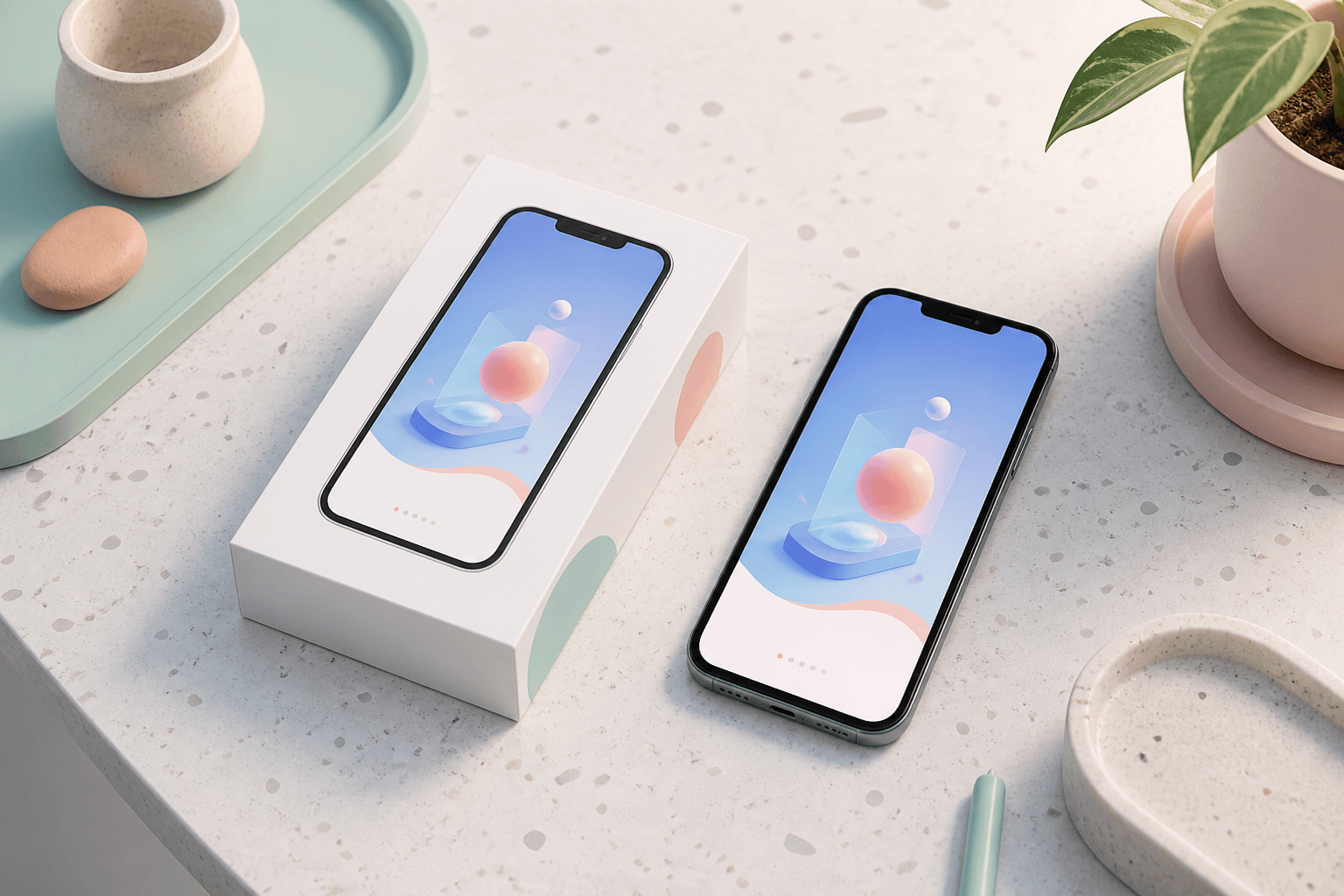
Product workspace showing how marketing and experience design overlap in practice
Traditional habitWhat it optimisesProduct-designed alternative
Channel brainstorms firstActivityOffer clarity first
Campaign themesNoveltyConsistent product promise
Adjective-heavy claimsPersuasion theatreOutcome proof beside CTAs
Marketing-owned websiteLaunch velocityShared narrative with product
Lead volume goalsFunnel vanityActivated, retained customers
If your marketing needs to oversell, your product experience is under-designed. Fix the product story-then amplify it.

A product-designed marketing stack

1. Positioning before production

Decide the category you want to own and the tradeoffs you accept. Positioning is a product decision with marketing consequences. If you refuse to choose, every campaign will try to be universally appealing and specifically forgettable.

Linear positioned around opinionated software project management. Figma positioned around collaborative design as the default. Notion expanded after a wedge. Positioning is not a tagline workshop. It is a constraint that makes every later design decision cheaper.

2. Narrative as UX

Every page and flow should answer: Who is this for? What happens next? Why believe you? If a section cannot answer one of those, cut it.

This is where marketing and product design literally share tools: hierarchy, progressive disclosure, defaults, empty states, and feedback. A pricing page is an interface. An onboarding checklist is messaging. A demo script is interaction design with a human runtime.

  • Homepage hero = first screen of the product story.
  • Feature sections = job stories, not capability inventories.
  • Onboarding = guided path to the promised outcome.
  • Emails = continuity of the same promise, not a second brand.

3. Proof as a product feature

Case studies, metrics, demos, and founder-led explanations are not “content assets.” They are risk-reduction features in the buying experience. Place them where risk appears-not in a blog nobody reaches until after the decision.

  1. Inventory every claim on your primary pages.
  2. Attach one concrete proof element to each claim-or remove the claim.
  3. Prefer specific outcomes over adjective stacks.
  4. Update proof as the product improves; stale proof is a trust bug.

4. Feedback that reaches the roadmap

Marketing should feed product strategy: objections become roadmap inputs, not only copy tweaks. That is how marketing and product stop competing for the same customer’s attention.

If demos repeatedly stall on setup time, that is not a “need a better objection-handling script” problem first. It is an activation design problem. If buyers ask who it is for, your ICP is still fog. Copy can patch for a quarter. It cannot permanently substitute for product decisions.

A simple framework: promise → path → proof → loop

LayerQuestionOwner (shared)
PromiseWhat outcome for whom?Founders + product + marketing
PathHow do they reach that outcome fast?Product + web experience
ProofWhy should they believe it?Marketing + customers + product
LoopWhat do we learn and change weekly?Whole team

If any layer is missing, campaigns become expensive theatre. If all four are present, even modest distribution compounds.

Examples: when marketing feels designed

Stripe’s marketing works because the product story is coherent from landing page to docs to dashboard. You are not baited into a fantasy and then abandoned in setup hell. Notion’s growth owed as much to templates and sharable artefacts-product surfaces that market themselves-as to conventional campaigns. Figma’s collaborative canvas was the demo.

Now a fictional contrast: “Pulse,” a wellness B2B app. Marketing runs a polished campaign about “culture transformation.” The product opens to a blank survey builder and a 14-field admin setup. Pulse does not have a creative problem. It has a designed-belief problem. The fix is not a louder campaign. It is aligning the first session to the promise-and then amplifying that truth.

How to apply this in the next two weeks

  1. Write the product promise in one sentence and force every channel to use it.
  2. Audit your homepage against your first-session product experience.
  3. Replace three feature claims with three outcomes customers repeated to you.
  4. Put one proof element next to your primary CTA.
  5. Kill one campaign that cannot explain the product better than the product itself.

Building a belief system across the customer journey

Product-designed marketing is not only a homepage philosophy. It has to survive the journey. Here is how I map belief across stages so teams stop shipping disconnected “assets.”

Journey stageBelief jobProduct-designed move
First touchIs this for me?Specific audience + outcome in the first screen
ConsiderationWill this work here?Proof from similar customers beside claims
CommitmentWhat happens if I say yes?Clear next step + expected outcome + low-friction ask
First useWas the promise real?Fast path to the outcome named in marketing
HabitIs this still necessary?Retention loops that match the original job
ReferralCan I explain this for someone else?Language simple enough to forward without a deck

Most early-stage marketing spends almost all energy on first touch and almost none on first use. That is why campaigns “work” in dashboards and fail in retention. Belief that dies in onboarding was never belief. It was curiosity briefly rented.

If you want a diagnostic that forces this honesty, use If your product isn’t growing, start here. If the website is the weak interface for belief, use the 50-website audit mistakes as a conversion checklist.

Hiring and process implications

Once you treat marketing as belief design, hiring changes. You do not need a channel specialist first if nobody owns the narrative. You may need a product-minded marketer, a founder who can write clearly, or a strategist who can align website and first-session before anyone optimises ROAS.

Process changes too. Campaign briefs should include the activation definition. Product specs should include the promise being made outside the app. Weekly reviews should inspect seams-not only spend. That sounds heavier than a content calendar. It is lighter than rebuilding trust after a mismatched launch.

Measuring marketing like a product surface

If marketing is belief design, measurement must change. Vanity reach is not enough. Track whether cold visitors can explain the offer, whether activated users match the promised segment, and whether retention follows the job you marketed. Creative tests still matter-but only after the promise is stable enough to test honestly.

A practical weekly trio: comprehension (qualitative or five-second tests), activation for the marketed promise, and cost per activated conversation. Everything else is colour. Colour is fine. Navigation is better. If those three move in the right direction, your marketing is starting to behave like a product surface-not a megaphone aimed at fog.

What research and craft libraries are useful for

Usability research helps you stop guessing about friction: Nielsen Norman Group, Baymard, and the Interaction Design Foundation. Performance is part of belief-see Core Web Vitals. For go-to-market operating judgement, First Round Review and Y Combinator’s Library remain high-signal. None of them will invent your promise. They will help you deliver it without self-sabotage.

How this shows up in my work at nau

This is the philosophy behind my work: product strategy, web experiences, and storytelling as one system-so marketing feels like product design, not noise. The alternative is spending more to explain what the product should have made obvious.

If you are deciding where to invest next, read what founders actually need isn’t more marketing, before you spend £10,000 on marketing, and why I care more about systems than campaigns.

Does this mean we shouldn’t run campaigns?

No. It means campaigns should amplify a coherent product story. Run them when Promise, Path, and Proof are aligned-or run small tests that teach you where they are not.

Who should own the website-product or marketing?

Own it jointly with one narrative source of truth. When ownership is a turf war, customers inherit the seams.

What if our product is genuinely complex?

Complexity raises the need for designed belief, not the right to be vague. Progressive disclosure is your friend. Mystery is not.

How do we know if marketing and product are aligned?

Strangers can explain the offer; new users reach the promised outcome without a rewrite of expectations; objections in sales match answers already on the site.

Make marketing feel inevitable

The best marketing does not interrupt. It recognises. It continues. It repays attention with the same truth the product delivers. Design that system once, and every channel gets cheaper. Fail to design it, and every channel becomes a more expensive way to explain yourself.

Ready to align your product story and your marketing so growth feels earned?

Talk about your product narrative

Let the right audience find you, with 10 videos only. That's the progress we build together.

Stefani Dimitrova

Stefani Dimitrova

Organic GTM & Product Storyteller