Go-to-Market · August 23, 2026

Skip the logo. Write the story first.

Identity without narrative is decoration with a higher invoice.

Skip the logo. Write the story first.

Somewhere between seed and Series A, a founder opens a tab for brand agencies. Mood boards appear. Wordmarks multiply. Someone says “we need to look real.” Fair impulse. Wrong sequence. A logo cannot carry meaning you have not decided. Identity without narrative is decoration with a higher invoice.

Every product deserves a story before it deserves a logo. Story answers who it is for, what unsatisfactory today it replaces, what better tomorrow it sells, and why this approach-not the neighbour’s. Logo answers “which mark do we put on the slide.” Useful. Secondary. When teams buy marks first, they often spend the next year trying to make the mark mean something it was never briefed to mean.

This piece is about sequencing narrative before identity, what a product story actually contains, and how to brief design so it expresses meaning instead of inventing it under deadline.

The logo-first trap

Logo-first feels productive. Deliverables are visible. Stakeholders can argue about curves. The company looks “serious.” Meanwhile the homepage still cannot say what changes for the customer. You have stationery for a company that has not finished its sentence.

  • Marks recognise; stories persuade. Recognition without persuasion is wallpaper.
  • Agencies can design beautiful emptiness if the brief is empty.
  • Rebrands often hide repositioning work that should have come first.
  • If the story changes every month, no logo will save the confusion.

I like good design. I refuse to let it substitute for clarity. Related: your product doesn’t have a marketing problem-it has a clarity problem.

Story vs identity: who does what

Story is the strategic asset: progress promised, proof offered, enemies named (the status quo, not a competitor tantrum), voice constraints. Identity is the expressive system: type, colour, mark, motion, materials. Confuse them and you get pretty pages that still fail the ten-second test.

Narrative decidesIdentity expressesFailure mode if reversed
Who it is forVisual cues that feel like themPretty generic; wrong room
What tomorrow improvesImagery and tone of that futureLifestyle stock with no claim
Why this approachDistinctive creative principlesLooks like the category average
What we refuse to beRestraint in the systemBrand that says everything, means nothing
Proof standardsLayouts that privilege evidenceDecoration crowding out receipts
A logo is a shortcut to a story people already know. If they do not know the story, the shortcut goes nowhere.

A framework: meaning → message → mark → system

1. Meaning: lock the product truth

Before typography, write the truths you are willing to defend: the buyer, the friction, the better tomorrow, the mechanism, the non-goals. If these are unstable, design will chase a moving target and you will pay twice. Progress language belongs here: people don’t buy products-they buy a better version of tomorrow.

2. Message: make the story portable

Message is how meaning travels in sentences: homepage hero, sales open, launch line, customer quote themes. Portable messages can be retold without the slide deck. If only the founder can say it, you do not have a message-you have a personality dependency.

  • One primary tomorrow for the homepage.
  • Three proof points that survive scrutiny.
  • A plain-English mechanism (how you create the change).
  • A short list of phrases you refuse (category sludge).

3. Mark: only now brief the identity

With meaning and message locked, identity has a job description. The mark should feel like the story-not like “tech, but friendly” or “premium, but approachable,” those empty dualities that haunt every bad brief. Give designers constraints rooted in narrative: who walks into the room, what emotion the tomorrow carries, what the category already looks like so you can refuse it.

4. System: extend without diluting

A system keeps story and mark aligned across site, product UI, launch, sales, packaging. Systems prevent the classic failure: gorgeous logo, chaotic everything else. For how I sequence this into shipping work, see from strategy to launch: how I approach a new product.

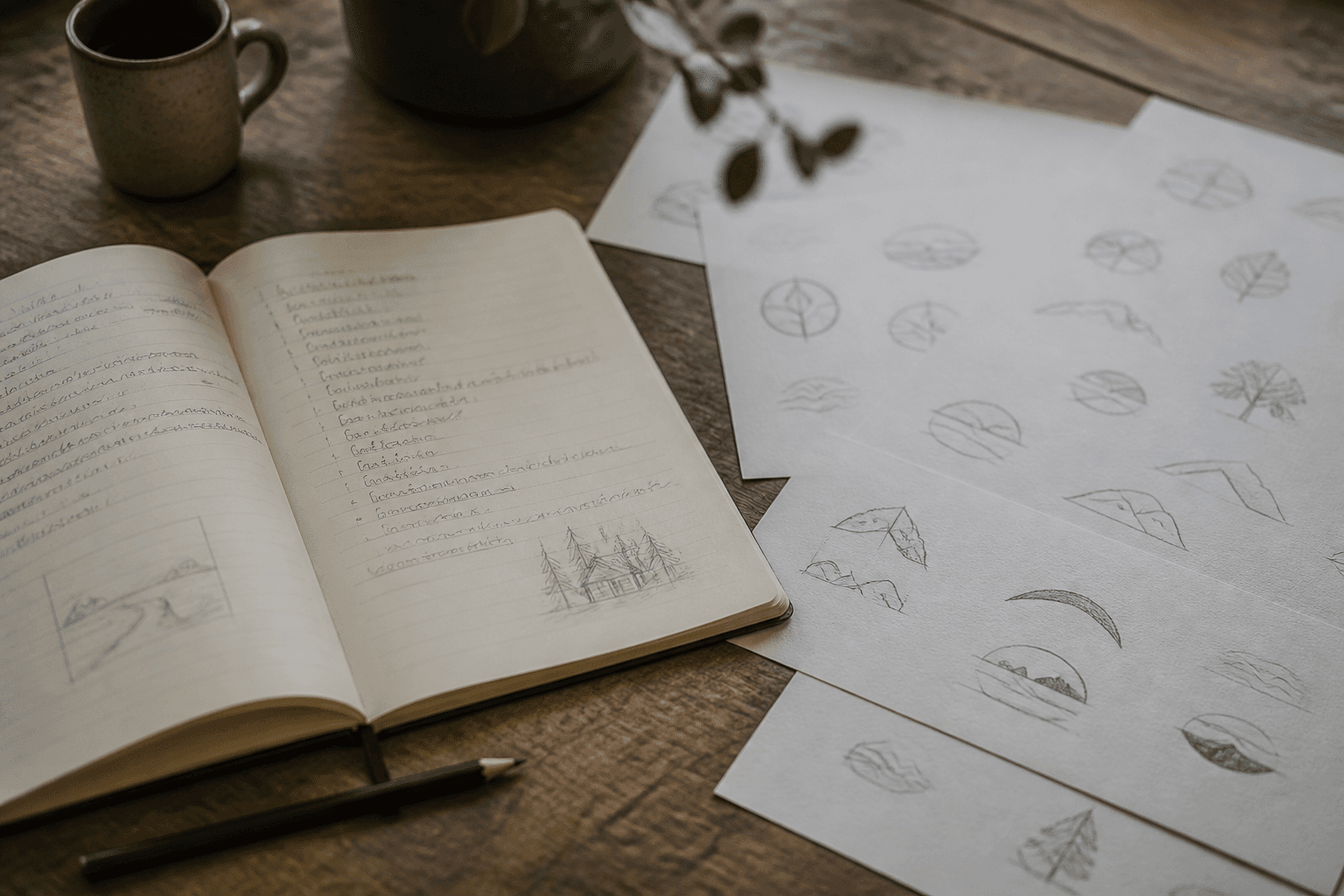
Narrative brief before brand mark: story leading identity

What belongs in a product story (and what doesn’t)

A product story is not a founder memoir, a feature tour, or a fake origin myth about a napkin. It is a decision frame for the buyer: why move, why now, why you. Origin can colour it. Features evidence it. Neither replaces it.

  1. Name the unsatisfactory present in the buyer’s language.
  2. Name the cost of staying (friction tax).
  3. Name the better tomorrow in observable terms.
  4. Name the mechanism without jargon soup.
  5. Name the proof and the honest limits.

A fictional contrast: two consumer brands

Brand A hires identity first. The mark is lovely. The site launches with soft gradients and a line that could sell yoghurt or middleware. Sales still improvises. Brand B spends six weeks locking narrative with customers, writes the no-logo homepage, then briefs design with voice restraints and a clear tomorrow. The mark is simpler. The company is clearer. Guess which one needs a “rebrand” nine months later.

Decoration is not strategy. Strategy can wear decoration beautifully once it exists.

When rebrands are really repositionings

Many “we need a new logo” requests are coded admissions that the story broke: new ICP, new offer, new category neighbour. Changing the mark without changing the narrative is cosplay. Do the repositioning work first-even if it only takes an intense hour: how I’d reposition your startup in 60 minutes.

And if growth issues are being blamed on “brand” while the offer and experience leak, you may be polishing the disguise: most marketing problems are product problems in disguise.

Story, launch, and earned attention

Narrative is also what you seed before launch day and what people earn attention with. A mark does not seed a category problem. A story does. Sequence accordingly: your launch campaign starts long before launch day and the difference between getting attention and earning it.

Brief ingredientGood enough looks likeNot ready yet
Primary buyerNamed role + context“Anyone who needs X”
Tomorrow claimObservable behaviour change“Empower / unlock / transform”
MechanismPlain sentence a peer can repeatBuzzword stack
Proof bar2-3 inspectable artefactsAdjectives only
Voice restraintsClear do’s and don’ts“Bold but warm” with no examples

What research is useful for

For brand as meaning system rather than decoration, Marty Neumeier’s work on differentiation remains useful. Harvard Business Review regularly covers brand strategy without confusing it with logo selection. UnderConsideration is a sharp lens on identity craft-best consumed after you know what the identity must say. None replace customer language captured in their words.

How this shows up in my work at nau

I start projects with narrative and product clarity before visual systems-websites included. Design arrives as expression of decisions, not as a substitute for them. If what you need is meaning before another asset sprint, start with what founders actually need isn’t more marketing. When marketing should feel built rather than bolted on: the best marketing feels like product design.

Do we need a polished logo to launch?

You need a clear story and a legible mark. A temporary wordmark with a sharp narrative beats a custom logomark on a fuzzy promise. Polish the identity when meaning is stable enough to brief.

What if investors expect “real branding”?

Show them narrative clarity, proof, and a coherent site. Serious companies look serious because they know what they are saying. Marks help; they do not replace the sentence.

How long should story work take before design?

Long enough to pressure-test with real buyers-often one to three intensive weeks early on. If it takes months of abstraction, you are philosophising. Talk to customers and decide.

Can identity work reveal the story?

Exploration can surface tastes and tensions. It should not be where strategy hides. Use design workshops to stress-test a draft narrative-not to invent one from gradients.

Finish the sentence first

Every product deserves a story before it deserves a logo. Meaning, then message, then mark, then system. Identity without narrative is decoration with a higher invoice. Finish the sentence. Then make it beautiful.

Want help locking the product story before you invest in identity?

Talk about your narrative

Let the right audience find you, with 10 videos only. That's the progress we build together.

Stefani Dimitrova

Stefani Dimitrova

Organic GTM & Product Storyteller