Content · August 4, 2026
Why the feed still needs the real world
How physical experiences make digital marketing significantly more believable.
Content · August 4, 2026
How physical experiences make digital marketing significantly more believable.
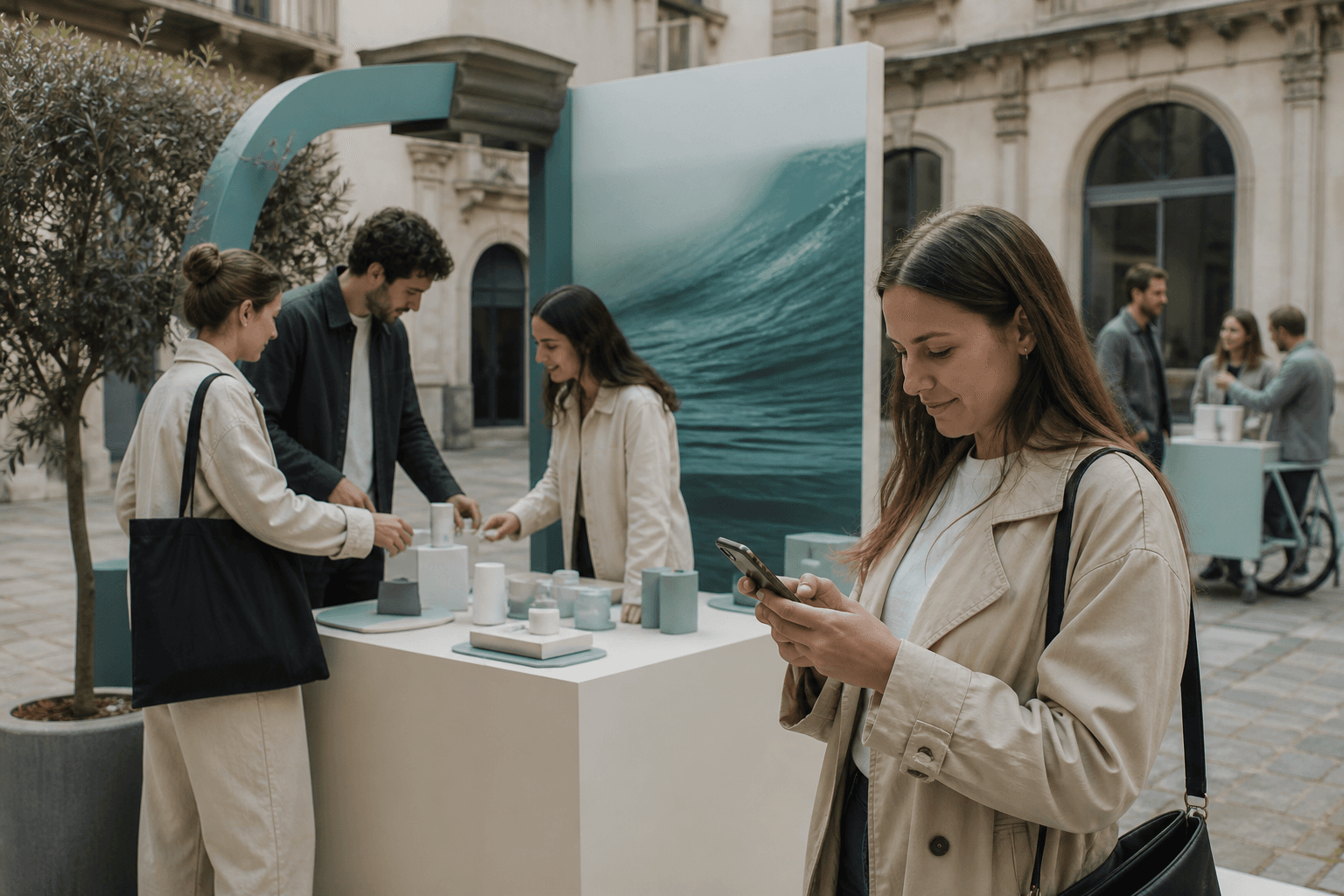
The internet is very good at looking finished. That is precisely the problem. A brand can appear inevitable online while remaining untested in rooms, streets, and conversations where consequences feel real. Audiences have learned to discount that gap.
The internet still needs the real world because credibility transfers better from physical experience into pixels than the other way around. A photo of a crowded workshop persuades differently from a stock illustration of “community.” A founder who has stood behind a table answers objections differently from a founder who has only answered comments.
This piece is about credibility transfer: how physical proof upgrades digital marketing, how to design for that transfer deliberately, and how to avoid using “IRL” as a costume for a strategy that remains fictional.
Anyone can buy polish. Templates, AI imagery, staged UGC, rented influencers, and perfectly lit product shots have democratised the appearance of traction. The average scroll is now a forgery-detection exercise. That does not make people cynical so much as efficient.
When I audit startup websites, the ones that convert rarely look the most expensive. They look the most specific. Specificity often comes from contact with reality-customers named, places referenced, constraints admitted. Related: why beautiful websites don’t always convert.
Contact is the raw material: demos, markets, dinners, office hours, installations, service moments in public. The point is mutual risk. You risk showing up. They risk time. That exchange creates a different class of memory than a 15-second ad.
Artefacts are portable residues of contact: photos with context, short films with imperfect audio, signed boards, stamped cards, screenshots of real queues, quotes with first names and permission. Design capture into the experience so you are not reconstructing mythology a week later.
Digital narrative should carry the texture of contact-not bleach it into brand adjectives. Keep names, places, numbers, and awkward truths where they help. Sterile case studies feel like compliance documents. Lived case studies feel like evidence.
The final transfer is social. People who were there become nodes. Equip them with language and relics. Ask for introductions while the experience is warm. This is where physical marketing becomes a system rather than a memory. For systems thinking over campaign theatre, see why I care more about systems than campaigns.

| Digital-only signal | Real-world upgrade | Why it believes harder |
|---|---|---|
| Stock lifestyle imagery | Photos from your event with context | Harder to counterfeit place and time |
| Anonymous testimonials | Named people who attended | Social risk is visible |
| Abstract community claims | Recurring public office hours | Repetition proves commitment |
| Influencer read | Partner venue endorsement | Local trust transfer |
| Metric screenshots alone | Metrics plus human scenes | Numbers gain a face |
The real world is not a channel. It is a credibility factory for every channel you already pay for.
Physical experience reduces perceived risk. Buyers who have seen you operate-even briefly-arrive online with a different prior. Ads feel like reminders instead of cold claims. Landing pages feel like continuations instead of first dates. Sales calls start mid-conversation.
This is why brands with retail, events, or strong community rituals often look “better at digital.” Sometimes they are simply better supplied with proof. Creative teams with true material outperform creative teams inventing vibes. If your funnel is weak, the issue may be missing proof rather than missing spend-see before you spend £10,000 on marketing.
Apple’s stores are marketing infrastructure for the entire digital funnel-touch reduces uncertainty that ads cannot. Gymshark’s community training culture gave social content a spine. Even SaaS companies that host sharp in-person summits find their webinars convert better afterward because the brand has been “witnessed.”
Fictional contrast: “HaloHire,” a recruiting platform. Their site claims “teams that move faster.” After six months of ads, demos stall on trust. They run a monthly open hiring clinic with two partner companies in a real office, film short candidate and recruiter reactions (with consent), and place those clips beside the homepage CTA. Same product. Different prior. Demo show-up rates rise because the internet finally has receipts.
Physical for physical’s sake becomes another vanity layer: elaborate sets, low conversation quality, content that looks like a music video for a product nobody understands. The test is still comprehension and next steps. If attendees cannot explain you, the installation failed-regardless of how good the reel looks.
Align experience with product truth. That is the same standard as marketing that feels like product design. If the room oversells what the product under-delivers, you have manufactured distrust with better catering.
| Track | Weekly question | Output that feeds digital |
|---|---|---|
| Contact | Where did we stand near customers? | Raw moments, objections, language |
| Translation | What became artefact and narrative? | Proof blocks, ads, emails, site updates |
| Placement | Where does proof sit beside risk? | CTA adjacency, sales leave-behinds |
| Learning | What will we change next week? | Offer clarity, demo path, partner list |
If you are still deciding whether the issue is marketing at all, read every startup looks like a marketing problem until you dig deeper. If founders keep buying motion instead of belief, start with what founders actually need isn’t more marketing.
If your digital marketing feels polished but unconvincing, run a short sprint before you rebuild the creative calendar. The goal is not a festival. The goal is one honest contact loop that produces artefacts your site and ads can wear.
At the end of two weeks you will know whether your digital story lacks creative-or lacks contact. Most teams discover the latter and feel oddly relieved. Relief is useful. It means the fix is concrete.
For trust, persuasion, and experience design, Nielsen Norman Group and Harvard Business Review remain high-signal. Baymard Institute helps when the transfer lands on ecommerce UX. Web.dev’s Core Web Vitals matter because slow pages tax hard-won belief. Physical proof cannot rescue a site that feels broken.
I design belief systems across product, web, and story. The real world is often the missing proof layer that makes those systems honest. When digital finally has something true to say, it needs less volume to be heard.
For spend sequencing, see where startups put their first £1,000 in the wrong place. For growth diagnosis, use If your product isn’t growing, start here.
No. A recurring small contact ritual often beats a rare spectacle. Consistency transfers credibility better than fireworks.
Use hub cities, travelling clinics, partner offices, or high-signal dinners. Remote does not mean disembodied-it means you choose contact points deliberately.
Shoot process, not only poses. Keep ambient detail. Let customers speak in their words. Avoid over-grading reality into advertisement plastic.
They help, especially with ongoing conversation. They rarely replace the scarcity signal of showing up in shared space-use both.
The internet still needs the real world because belief is easier to manufacture where people share air. Create contact. Freeze artefacts. Translate without sterilising. Let networks carry the rest. Digital marketing becomes significantly more believable when it stops inventing reality and starts documenting it.
Want help turning real-world proof into digital marketing people actually believe?
Talk about credibility systemsContinue reading
A complementary essay from the same thread.
Swipe left for next, right for previous.

Up next · Content
Designing marketing that naturally moves from pavement to phone.
Read essay →Let the right audience find you, with 10 videos only. That's the progress we build together.

Stefani Dimitrova
Organic GTM & Product Storyteller