Content · August 5, 2026
Your city is an underrated growth channel. Use it.
What founders overlook when every strategy starts with social media.
Content · August 5, 2026
What founders overlook when every strategy starts with social media.

Open most early-stage marketing plans and you will find the same opening move: social. Platforms, calendars, creatives, maybe a sprinkling of SEO. The city where the founders actually live appears, if at all, as a line item for “events sometime.” That is backwards more often than teams admit.
Your city is probably your most underrated marketing channel. Not because local is romantic. Because density, trust transfer, and distribution friction favour the place where you can show up twice in one week without booking a flight. National ambition is fine. Starting as if you already have national belief is expensive fiction.
This piece is about treating the city as a system: neighbourhoods as segments, venues as partners, streets as inventory, and local reputation as the asset that makes every later digital pound work harder.
Social media optimises for attention graphs that ignore geography until you pay for it. Your city optimises for coincidence: the same people in the same cafés, co-working spaces, industry meetups, and late trains. Coincidence is a distribution advantage if you design for it.
I am not arguing you should never run ads. I am arguing that many founders run ads to compensate for never becoming known on their own street. That is a sequencing error with a media budget attached. Related: what founders actually need isn’t more marketing.
List the physical and recurring places your ICP occupies: districts, campuses, gyms, clinics, markets, industry hubs, evening venues, parent groups, founder breakfasts. You are not looking for “cool areas.” You are looking for repeated assembly with the right problem.
If you cannot name five gathering points in your city, you do not have a local strategy yet-you have a vibe. Mapping is research. Walk it. Ask customers where they spend Tuesday evenings. Treat the answers as channel inventory.
Choose one nest-a district, campus, or corridor-and go deep for ninety days. Deep means: repeated presence, consistent promise, local proof, and partnerships that compound. Shallow means: one pop-up, three posts, and a claim that you “did local.”
Beachheads work in product strategy for the same reason they work in cities: focus creates legibility. For the product version of this discipline, see the product strategy framework before designing a screen.
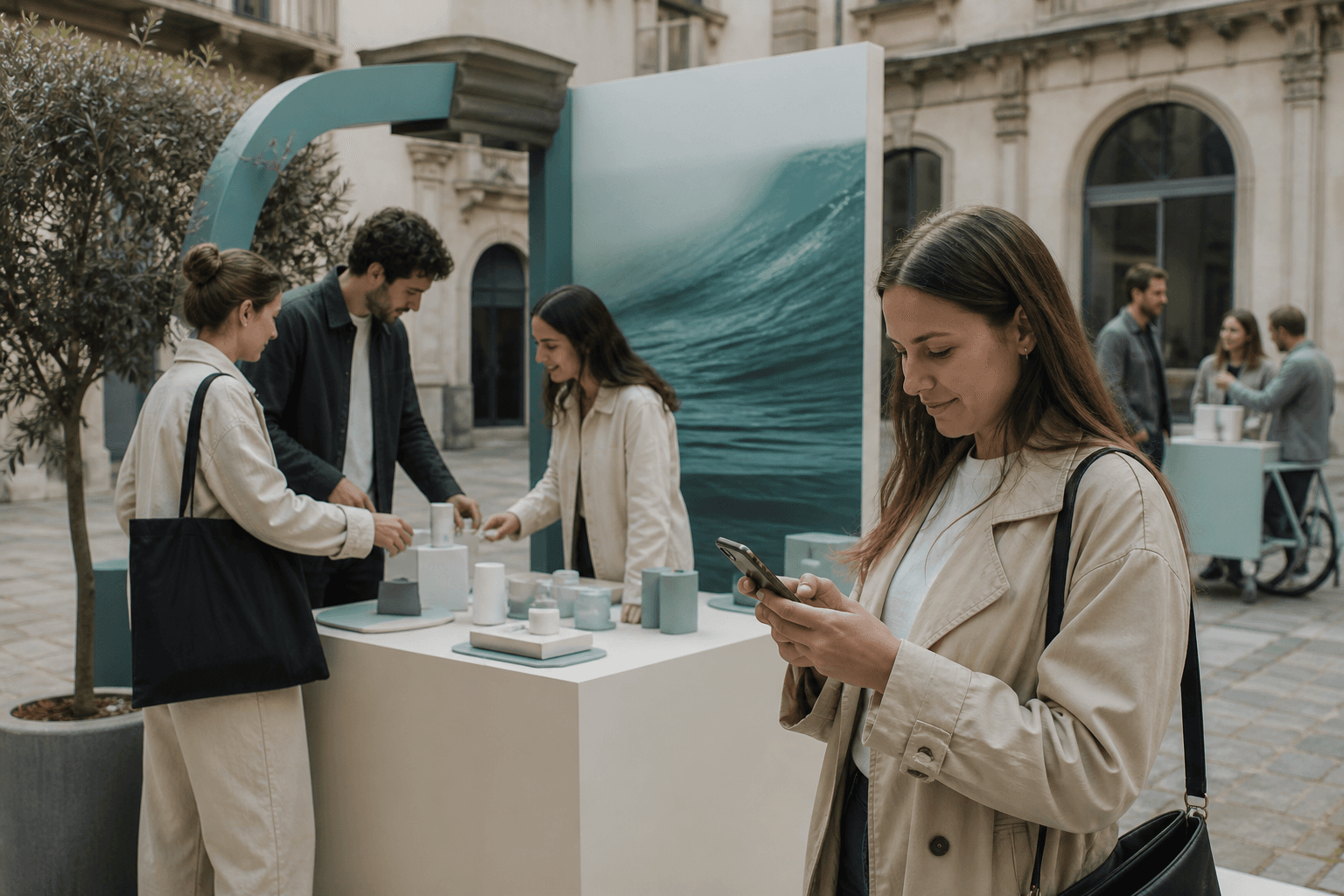
Local partners-cafés, studios, clinics, retailers, community organisers, universities-already hold attention and belonging. Design offers that make them look good: co-hosted evenings, useful workshops, exclusive access for their community, revenue share that is boringly clear.
Cities reward rhythm. A monthly newsletter nobody sees is weaker than a weekly table, office hour, or walking tour that becomes expected. Pulse creates the feeling that you are part of the place’s operating system-not a campaign visiting from the internet.

| Social-first habit | City-first alternative | Advantage |
|---|---|---|
| Post daily everywhere | Show up weekly in one nest | Memory through repetition |
| Target broad interests | Target gathering places | Context does half the selling |
| Buy reach | Borrow local trust | Lower CAC on early believers |
| Measure followers | Measure named introductions | Pipeline you can shake hands with |
| Scale nationally early | Dominate one corridor first | Clearer story, denser proof |
If nobody in your postcode can explain what you do, your national ads are a very expensive way to stay theoretical.
Noticeboards are not dead; irrelevant flyers are. Street teams fail when they interrupt; they work when they help. Sponsorships fail when they are logo rentals; they work when they solve a community problem. Geo-targeted ads work better after local proof exists-because the creative can show a real place, not a stock skyline.
Many consumer brands that look “internet native” actually won a city first-New York coffee culture, London fashion micro-scenes, Berlin nightlife adjacency. Even software companies use city density: invite-only dinners in one tech corridor, office hours in one co-working hub, university ambassadors on one campus.
Fictional example: “Parcelmind,” a returns logistics tool for indie retailers. Instead of national LinkedIn ads, they spend eight weeks partnering with two shopping streets, running Tuesday clinics for shop managers, and publishing a tiny “returns map” of participating stores. Digital campaigns that follow feature real shopfronts. Suddenly the ads feel like documentation.
If your buyers are sparse by nature (highly specialised enterprise across continents), pure city strategy will frustrate you. Use hubs instead: the two or three cities where density still exists. If your product is illegal to demo in public, adapt with private rooms. If your positioning is still fog, fix that before you rent a high street window-clarity still comes first. See your product may not have a marketing problem.
Founders fear looking “too local.” Customers fear looking uncertain. A sharp neighbourhood story often reads as focus, not smallness-especially when the website explains the wider ambition after the local proof. Lead with the nest; reveal the map.
Allocate a fixed percentage of early marketing to city operations: partnerships, micro-events, print that is designed rather than desperate, geo creative that references real places. Compare cost per activated conversation against your social experiments. For spend discipline, use before you spend £10,000 on marketing and where the first £1,000 goes wrong.
| City investment | Primary job | Success signal |
|---|---|---|
| Weekly nest presence | Familiarity | People recognise you without ads |
| Partner evenings | Trust transfer | Warm intros from the host |
| Local landing page | Conversion continuity | Higher convert than generic home |
| Geo ads after proof | Amplification | Lower CPA than cold national |
| Local case stories | Believability | Sales calls get shorter |
City channels fail when the offer still feels generic. Local language should match local jobs: same promise, sharper context. That is belief design-the same philosophy as marketing that feels like product design. The street is another interface. Treat it with the same respect you pretend to give the homepage.
Also build systems, not one-off “local campaigns.” Rhythm, partner CRM, capture links, and weekly debriefs matter more than a single launch party. That is why I care about systems more than campaigns.
For place-based brand and community strategy, Harvard Business Review and First Round Review often cover density and distribution tradeoffs. Google’s geo and local resources remain practical for discovery hygiene even if your strategy is wider than Maps. Project for Public Spaces is surprisingly useful for understanding why people gather where they gather-marketing that ignores gathering physics is just noise outdoors.
When founders ask me for a marketing plan, I ask where belief is cheapest to create. Often the answer is closer than their ad account. City strategy is not a rejection of digital growth. It is how digital growth becomes believable.
If everything still looks like a marketing problem, dig deeper with every startup looks like a marketing problem until you dig deeper. If growth is flat, start with If your product isn’t growing, start here.
Pick hub cities where clusters of buyers already exist. Remote-first is an operating model, not a law against ever being in a room.
It usually speeds learning. A nest gives you language, proof, and partners you can later replicate. Spreading thin slows everything.
Choose density of ICP plus partner willingness plus logistical ease. Coolness is optional. Assembly is not.
Designed, place-specific print with a clear capture path can outperform generic digital in dense contexts. Undesigned flyers still deserve the bin.
Your city is inventory, trust, and distribution you are already paying rent to occupy. Map it. Nest in it. Partner through it. Keep a pulse. Then let social media amplify a reputation that already exists on the pavement-not invent one from a content calendar alone.
Want help turning your city into a real growth channel-not just a postal address on the About page?
Talk about local-to-digital strategyContinue reading
A complementary essay from the same thread.
Swipe left for next, right for previous.
Up next · Content
How physical experiences make digital marketing significantly more believable.
Read essay →Let the right audience find you, with 10 videos only. That's the progress we build together.

Stefani Dimitrova
Organic GTM & Product Storyteller