Content · August 3, 2026

The street campaign isn't over when people walk past

Designing marketing that naturally moves from pavement to phone.

The street campaign isn't over when people walk past

I have seen beautiful street campaigns die at the kerb. Crowds, smiles, branded cups, a hundred stories for the team Slack-and then silence in the CRM. The pavement did its job. The system after the pavement did not exist.

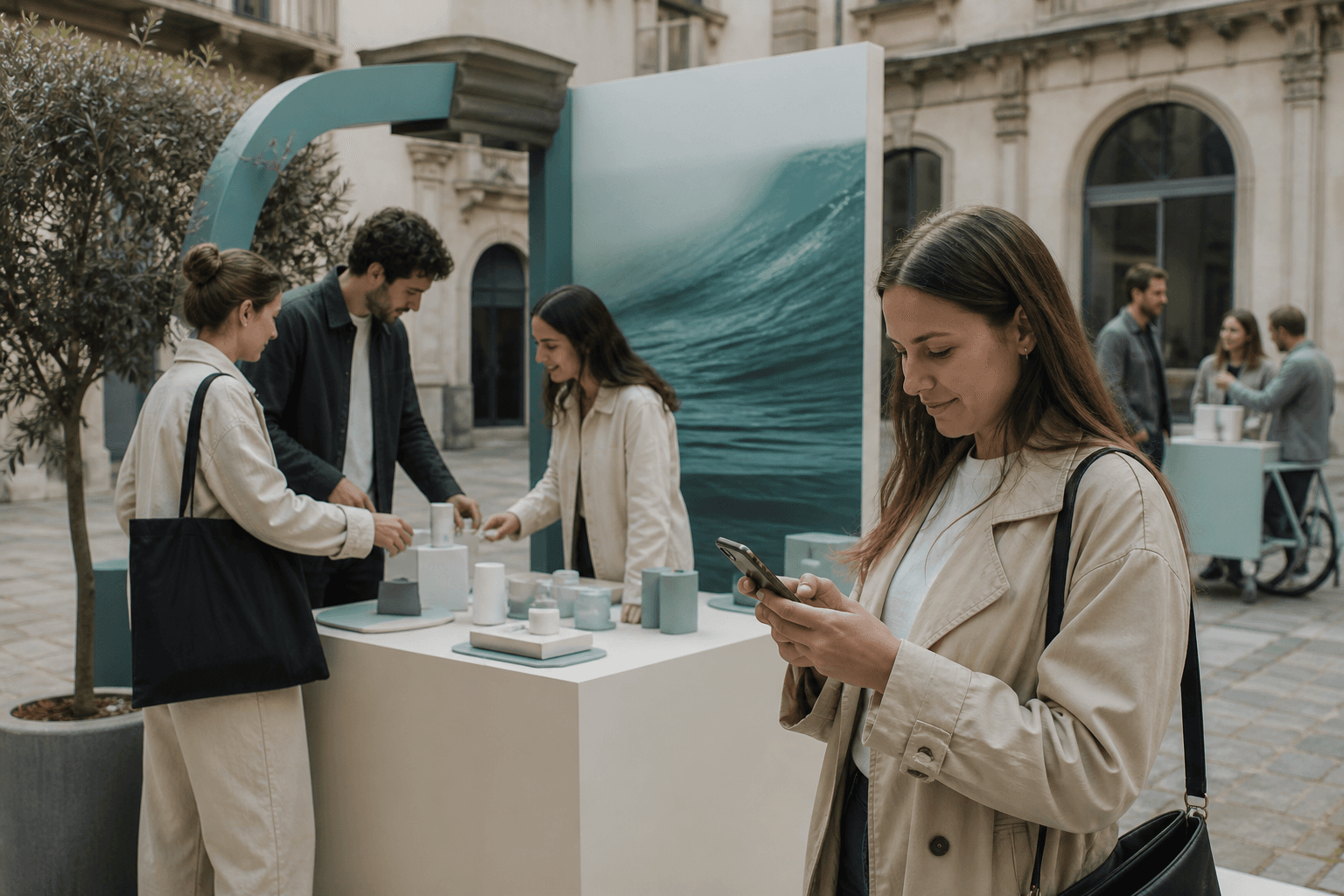
A good street campaign does not end on the street. It is designed as a bridge: from attention in public to a relationship on a phone, with the same promise travelling intact. Offline theatre without a follow-up system is hospitality. Marketing requires a handoff.

This piece is about that handoff-capture, continuity, and follow-up-so experiential energy becomes pipeline instead of nostalgia.

The kerb is not the finish line

Street moments create heat. Heat decays. Without a designed next step, you are renting emotion by the hour. The job of the campaign is not to maximise footfall; it is to convert shared presence into a durable path.

  • Capture while motivation is high-not the next morning.
  • Continue the same story on the first digital screen.
  • Follow up like an operator with a calendar, not a mood.
  • Measure the bridge, not only the crowd.

This is belief design under time pressure. The same coherence I argue for in marketing that feels like product design applies when the first interface is a pavement and the second is a lock screen.

A framework: hook → capture → continue → compound

1. Hook: the public reason to stop

The hook must be legible in three seconds from a walking pace: what is happening, who it is for, what they get. Clever mysteries lose to clear invitations when people are cold, late, or carrying shopping.

Design the hook around a job, not a logo. Sampling, a micro-demo, a useful map, a rapid consultation, a challenge with a visible prize. If staff need a paragraph to explain why someone should stop, the hook is unfinished.

2. Capture: the smallest honest ask

Capture is where campaigns usually become greedy. Long forms on windy streets are how you learn that friction is real. Prefer QR to a single-purpose page, SMS keyword, WhatsApp start, calendar booking, or tap-to-wallet pass. Match the ask to the trust you have earned in the last ninety seconds.

3. Continue: the first screen must feel like the street

The landing experience should reference the place, the offer, and the tone of the interaction. Generic homepages punish people for scanning your QR. Continuity is respect. Discontinuity is how you teach customers that offline and online are two different companies.

  • UTM or unique codes per location and day.
  • Headline that names the event or street offer.
  • One primary CTA-not a navigation maze.
  • Proof from the same campaign visible above the fold.

4. Compound: follow-up that earns the next yes

Follow-up is an operating system: timed messages, human replies to hot leads, a second local invitation, a useful artefact delivered digitally, a clear expiry on time-limited offers. Without compounding, capture is just a list of people you briefly amused.

Street campaign QR and phone handoff showing offline-to-online continuity
StageStreet jobPhone job
HookStop the right personRemind them why they stopped
CaptureMake the ask easy in publicConfirm instantly with value
ContinueKeep promise consistentComplete the next step fast
CompoundCollect language and objectionsSequence nurture and invites
LearnDebrief staff same dayUpdate pages and scripts weekly
The QR code is not a strategy. The journey after the QR code is the strategy.

Common bridge failures

Dead QR codes. Pages that demand app installs before value. Offers that expire in the fine print. Staff who cannot explain the next step. Social teams posting event photos while CRM stays empty. These are not creative problems. They are systems problems wearing hi-vis.

  1. Test every capture path on multiple devices an hour before doors.
  2. Script the verbal handoff: what to say when offering the QR.
  3. Send an immediate confirmation with one clear action.
  4. Assign an owner for same-day hot follow-ups.
  5. Review drop-off between scan → land → convert within 48 hours.

Examples: pavement to phone done properly

Food brands that sample and drive to a first-order link with a location-specific code understand the bridge. Political campaigns that turn doorstep conversations into timed SMS sequences understand the bridge. Product studios that run sidewalk demos into calendar bookings understand the bridge. The creative differs; the system rhyme remains.

Fictional example: “Brightlane,” an e-bike subscription. Their street team lets people ride a short loop. At the end, a staff member offers a QR for a neighbourhood day-pass rather than a hard sell subscription. The page shows the exact corner they are standing on, a map of pickup points, and a 60-second booking. Follow-up offers a weekend ride with a friend. Street energy becomes product habit because the phone path was designed first.

Measurement for offline-to-online systems

MetricDefinitionDecision it informs
Stop-to-scan rateScans ÷ meaningful conversationsWhether the ask matches trust
Scan-to-land rateSessions ÷ scansTechnical and message continuity
Land-to-action ratePrimary CTA ÷ sessionsOffer clarity on the first screen
Action-to-activationActivated users ÷ actionsWhether follow-up compounds
Cost per activatedFully loaded street cost ÷ activationsWhether to repeat or redesign

Attribution will never be as tidy as a last-click dashboard. That is fine. Directional honesty beats false precision. If you need spend guardrails, use before you spend £10,000 on marketing. If early money keeps vanishing into unmeasured motion, read where the first £1,000 goes wrong.

Building the follow-up machine

Treat follow-up as product operations. Define states: scanned, landed, actioned, activated, stalled. Define owners and SLAs. Write message templates that sound like the street team, not a corporate newsletter that wandered in. Include a path back to another local moment so the city loop continues-see your city as a marketing channel for the wider nest strategy.

Also feed insights upstream. Objections heard on the street should change homepage copy within a week. That loop is how campaigns become systems rather than stunts.

When not to run a street campaign yet

If you cannot explain the offer in one sentence, stay off the high street. If you have no capture page, stay off the high street. If nobody owns follow-up after 6pm, stay off the high street. Fix clarity and operations first-it may not be a marketing problem, and digging deeper often reveals that.

Useful references for capture and continuity

For mobile conversion patterns, Baymard and Nielsen Norman Group help you stop designing hostile first screens. For performance that protects hard-won scans, see Core Web Vitals. For lifecycle and retention thinking after the handoff, First Round Review remains useful. The street does not forgive slow, confusing phones.

How this shows up in my work at nau

I help founders connect story, product, and web into one system. Street campaigns are simply another front door. If that door does not lead somewhere coherent, you have decorated a pavement. If it does, you have built a growth loop people can walk into-and tap through.

If you are tempted to buy more noise instead of fixing the bridge, start with what founders actually need isn’t more marketing.

What capture method works best?

The one your audience already uses and that gets them to value fastest-often QR to a fast mobile page or a messaging start. Test; do not romanticise a channel.

How fast should follow-up be?

Immediate confirmation always. Human follow-up for high-intent actions within a few hours while the memory is warm. Waiting until “next week’s newsletter” is how heat dies.

Should we push the app install on the street?

Only if install is required for the promised outcome and the value is immediate. Otherwise earn the install after a lighter commitment.

How do we train temporary staff?

One-sentence promise, three FAQs, two capture paths, and a ban on improvising discounts that break the system. Role-play the handoff before the public arrives.

Design the bridge before the bunting

A good street campaign does not end on the street because marketing is a journey, not a photo. Hook with clarity. Capture with respect. Continue with continuity. Compound with follow-up. When pavement and phone tell the same story, experiential marketing stops being a memory and starts being a system.

Want help designing street-to-phone campaigns that actually convert-not just look busy?

Talk about your capture system

Let the right audience find you, with 10 videos only. That's the progress we build together.

Stefani Dimitrova

Stefani Dimitrova

Organic GTM & Product Storyteller