Content · July 30, 2026

Your next campaign should start with a walk outside

Observing people is often more useful than another analytics dashboard.

Your next campaign should start with a walk outside

Most campaign briefs begin in a room with a screen. Decks. Dashboards. Competitor ads pulled into a moodboard that somehow always ends up purple. Then a media plan arrives, and everyone agrees it looks rigorous. Meanwhile, nobody has watched an actual human decide anything in the last fortnight.

I am not anti-data. I am anti-data-as-substitute-for-contact. Analytics tell you what happened inside the systems you already built. A walk tells you what people do when your brand is not the centre of the universe-which is nearly always. If your next campaign starts with a channel brainstorm, you have already skipped the most affordable research method available: observation.

This piece is about field walks as marketing research: how to look, what to capture, and how to turn street-level insight into campaigns that fit reality. Pair it with why the best marketing doesn’t always start behind a screen and your city is the most underrated marketing channel.

What dashboards cannot see

Dashboards are excellent at counting. They are poor at explaining hesitation, social awkwardness, weather, queue behaviour, and the tiny workarounds people invent when products almost fit their lives. Those details are often where campaigns live or die.

  • Where attention pools without advertising (windows, queues, crossings, benches).
  • What people already photograph, share, or complain about out loud.
  • Which messages are illegible at walking speed.
  • Where trust is conferred (staff, packaging, other customers)-not claimed.
  • Which frictions are physical (bags, children, rain) versus digital (forms, logins).

The field walk framework

A useful walk is not a romantic stroll. It is a structured observation with a narrow question. I use five lenses so teams do not come back with “vibes” and a few nice photos.

LensQuestionCapture
PathWhere do bodies actually go?Sketch of desire lines vs intended routes
PauseWhere do people stop without being asked?Timestamps + what they look at
PropsWhat objects mediate the experience?Bags, phones, tickets, cups, signage
TalkWhat language do people use unprompted?Verbatim phrases (no polish)
FrictionWhere does the face change?Confusion, irritation, delight, boredom

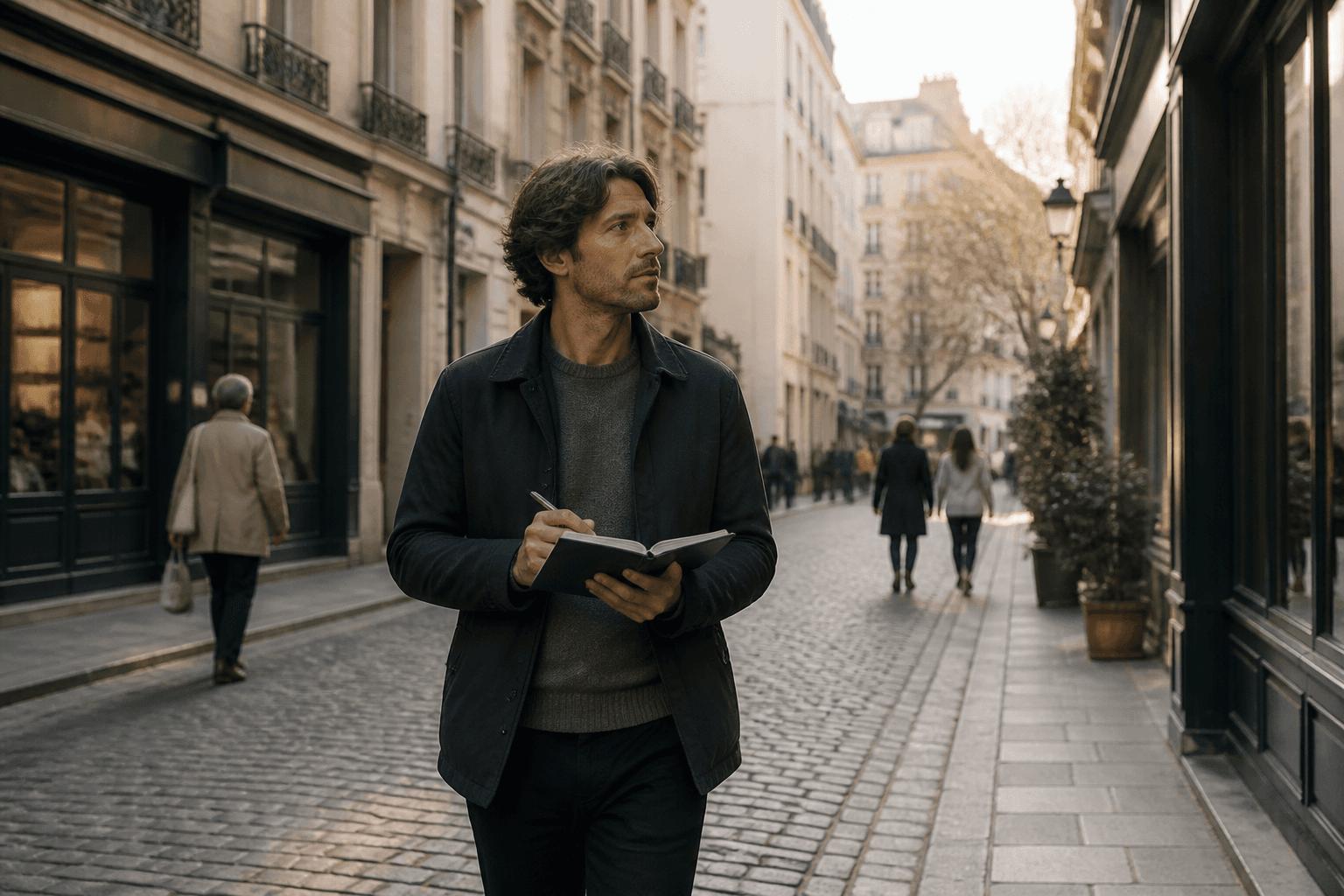
One walk with five lenses beats five meetings with zero contact. Bring a notebook. Leave the pitch deck at the office. If you must bring a phone, use it as a camera and voice memo-not as a Slack portal to the same opinions you already have.

Notebook and map used during a field observation walk for campaign research

How to run a campaign walk in half a day

1. Pick one behaviour, not one brand question

Bad: “How do people feel about us?” Good: “How do office workers decide what to eat between 12:00 and 13:15 on this street?” The second question produces campaign fuel. The first produces projection.

2. Choose a site where the job happens

Go where the decision occurs-not where your office is convenient. If your customers buy in a rush at stations, do not research them in a focus-group suite with biscuits. Context is part of the data.

3. Observe before you interview

Watch first. People perform when questioned. They reveal when ignored (ethically, of course-no stalking, no recording private conversations without consent). After observation, short intercepts can clarify what you saw. “I noticed people skip that queue-what’s the workaround?” is better than “Would you use an app that…?”

From observation to idea (without killing it in the room)

The failure mode after a good walk is translation. Someone turns a vivid insight into a generic insight slide (“Customers value convenience”) and the originality dies on contact with PowerPoint. Protect the specificity.

  1. Write the insight as a scene, not a noun: “Parents juggle a pram and a phone while the QR menu times out.”
  2. Name the tension in human terms: dignity, speed, belonging, competence, care.
  3. Invent three interventions that reduce that tension in situ.
  4. Only then choose channels-and prefer the channel closest to the scene.
  5. Prototype small: tape, print, staff script, temporary sign. Watch again.

What this changes in media planning

Walk-led campaigns often spend differently: more on placement craft, less on carpet-bombing reach; more on staff enablement, less on vanity film; more on one perfect corner, less on twelve mediocre formats. That can look “small” to a traditional plan-and larger in memory. See also small budgets don’t kill good ideas-predictable ones do.

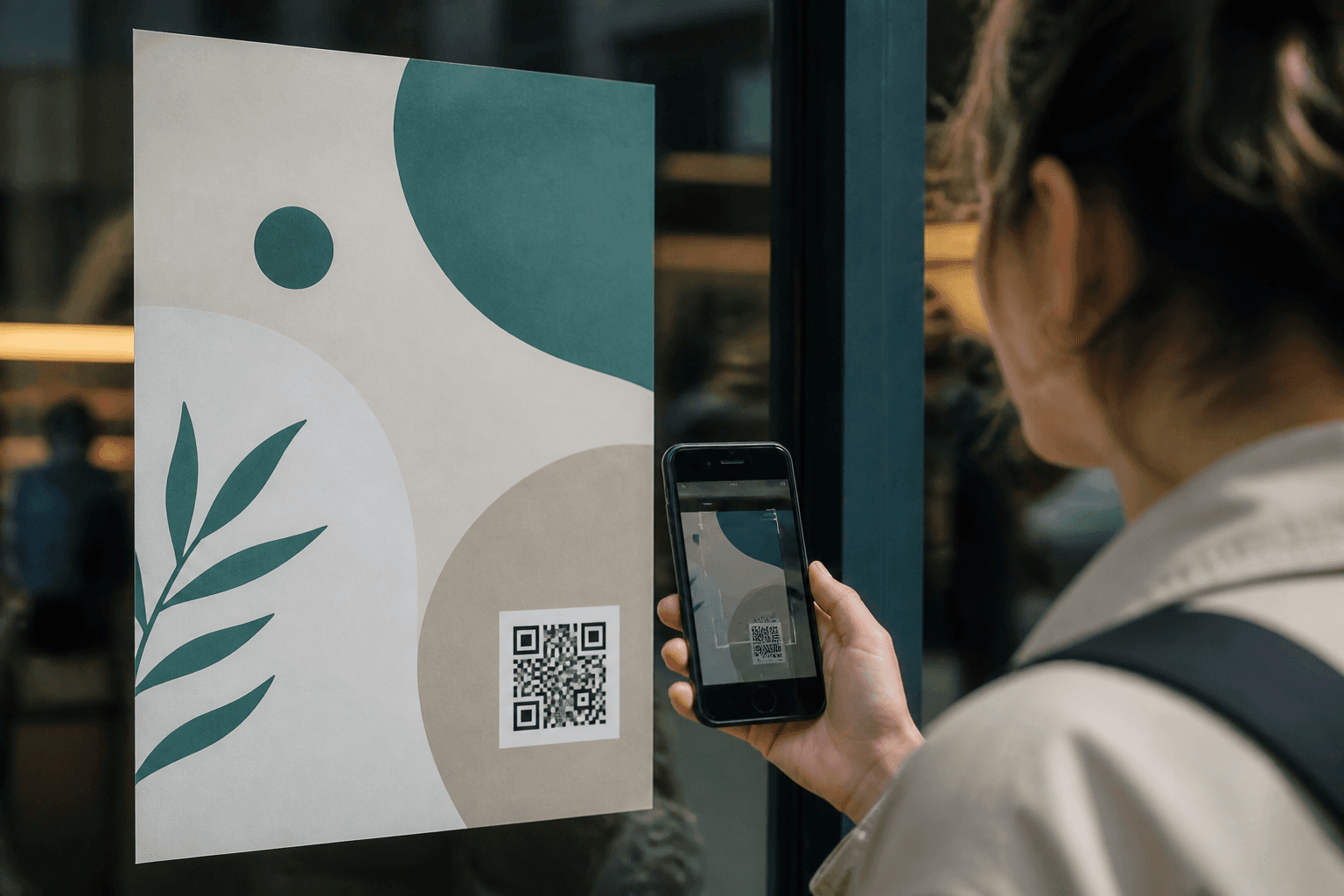
Digital still matters. The walk often tells you what the digital layer should be: a faster queue ticket, a clearer map, a promise that matches the pavement reality. For the handoff, read the QR code was never the problem. For continuity after the street moment, see a good street campaign doesn’t end on the street.

Ethics and manners (non-negotiable)

  • Do not photograph faces without consent for research you will publish.
  • Do not obstruct paths or create safety risks for the sake of “engagement.”
  • Do not treat vulnerable situations as content opportunities.
  • Do share findings with teams who can fix operational friction-not only with creative.

Observation without ethics is surveillance cosplay. Observation with manners is respect. Customers can feel the difference in the eventual campaign.

Exercise: the competitor walk

When to walk vs when to stay at the desk

Walk when behaviour is local, physical, social, or poorly instrumented. Stay at the desk when the question is purely digital funnel maths-and even then, sample real sessions on real devices. Many “conversion problems” are still comprehension problems; a walk through your own onboarding with a stranger narrating aloud is a kind of walk too. Related: before you spend £10,000 on marketing and why I care more about systems than campaigns.

Further reading

For observational research craft, Nielsen Norman Group’s field study guidance is practical. For service design in real environments, the Interaction Design Foundation has clear primers. For cities as systems of behaviour, Project for Public Spaces remains a useful reminder that people rewrite the plan with their feet.

Isn’t this just ethnography without the credentials?

It is lightweight observation with campaign intent. Hire specialists for deep ethnography. Do not skip contact entirely because you are not an anthropologist.

How many walks do we need?

One good walk can kill a bad idea. Three walks across different times of day usually reveal the pattern. Do not wait for a perfect sample size to start seeing.

What if we sell online only?

Walk the moments around the purchase: unboxing, desk setups, delivery handoffs, customer support calls. Online brands still live in physical lives.

How do we convince stakeholders this is “real research”?

Bring artefacts: sketches, verbatim lines, timed friction notes, before/after prototypes. Artefacts beat opinions. Opinions are what you already had in the meeting.

Start outside

Your next campaign does not need another dashboard tab. It needs contact with the world it hopes to enter. Walk first. Ideate second. Buy media third. That order feels slower in the calendar and faster in the market-because you stop funding fantasies.

At nau, I build strategy from product truth and human context, not from channel fashion. A walk is often the cheapest way to find both. If your team has not left the building since the last rebrand, the building may be the problem.

Want a campaign brief built from real observation-not recycled decks?

Book a strategy conversation

Let the right audience find you, with 10 videos only. That's the progress we build together.

Stefani Dimitrova

Stefani Dimitrova

Organic GTM & Product Storyteller