Content · August 19, 2026
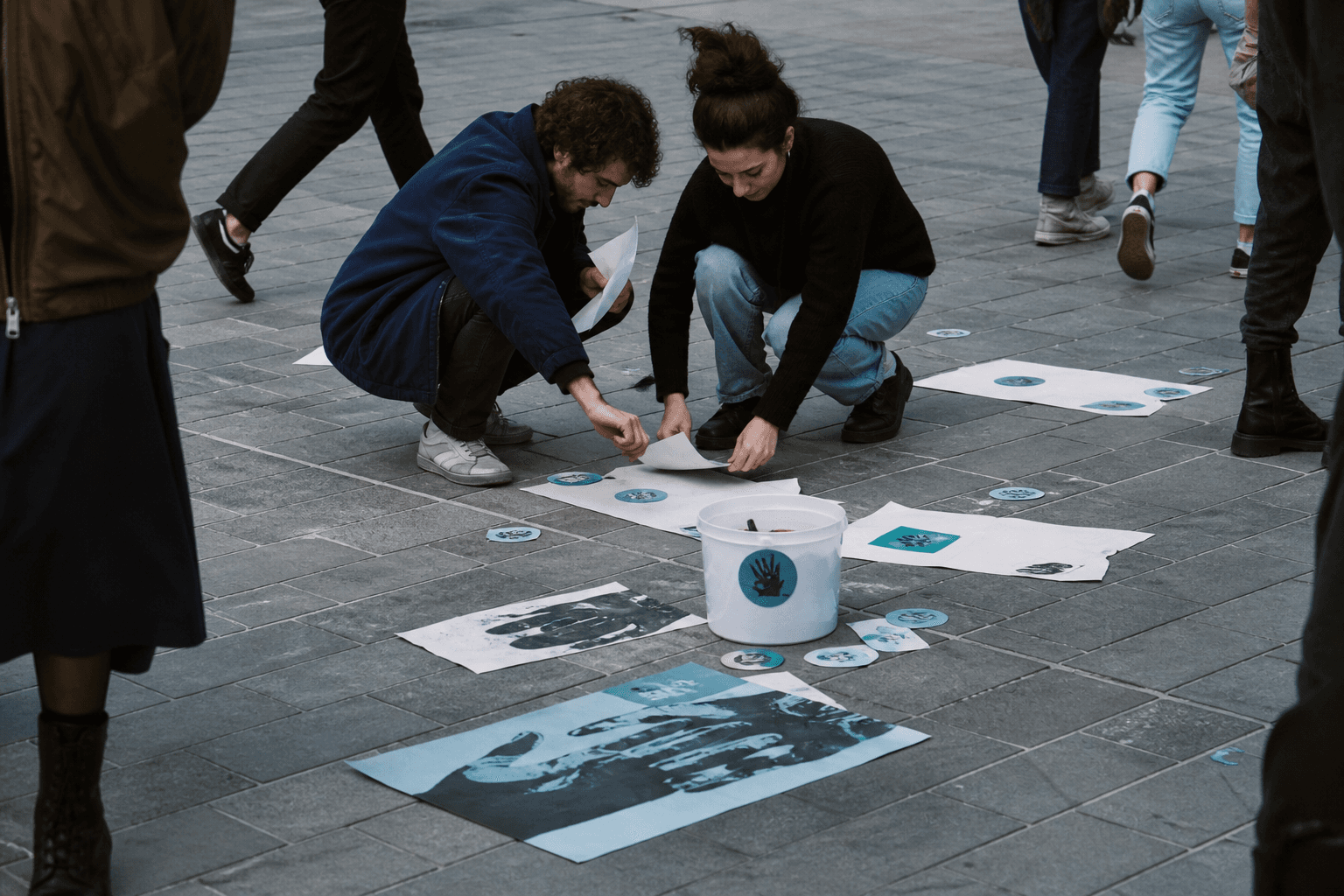
Impressions fade. Footprints stick.
Traces in the world beat vanity metrics on a dashboard.
Content · August 19, 2026
Traces in the world beat vanity metrics on a dashboard.

Impressions are a polite fiction. They suggest someone might have glanced in your direction while scrolling past your carefully expensive rectangle. Footprints are ruder and more useful: a stamp on a map, a queue that bent around a corner, a card in a wallet, a phrase repeating in a neighbourhood, a photo that appeared without a bribe.
Good marketing leaves footprints before it leaves impressions. Traces in the world beat vanity metrics on a dashboard because traces are harder to fake and easier to follow. An impression evaporates with the session. A footprint can be revisited, photographed, argued with, and trusted.
This piece is about designing for residue: physical and social traces that precede scale, how to read footprints as leading indicators, and how to stop mistaking a busy analytics chart for a brand that has actually been somewhere. For the offline-first instinct behind this, see the best marketing doesn’t always start behind a screen.
An impression means your asset was eligible to be seen. A footprint means someone interacted with reality in a way that left evidence: they walked up, tried something, took an object, told a friend, returned, searched your name because a place reminded them. Contact creates different memory than proximity.
I am not arguing against measurement. I am arguing against worshipping the wrong unit. If your plan only produces impressions, you are renting glances. If it produces footprints, you are manufacturing priors that make later impressions cheaper to believe-the internet still needs the real world.
A footprint is any durable residue of brand contact outside the ephemeral feed: a physical artefact, a recurring ritual, a marked place, a witnessed demonstration, a local phrase, a line people join, a sticker that stays because it looks good rather than because you paid for placement. Soft footprints count too-unprompted mentions, named referrals, “I saw you at…” openings on sales calls.
What does not count: a boosted post with no lived referent, a hashtag nobody uses without incentive, a QR on a flyer that leads to a generic homepage, a “community” that exists only as a claim on a landing page. Those are costumes. Related on transfer and honesty: why the internet still needs the real world.

| Impression-led plan | Footprint-led plan | What compounds |
|---|---|---|
| Buy reach first | Create contact first | Warm priors for later media |
| Creative as persuasion | Creative as residue + reminder | Proof libraries over one-off films |
| Success = CPM / CTR | Success = traces + next steps | Belief and relationships |
| Place as media buy | Place as research and ritual | Local gravity |
| Share asks in captions | Artefacts people choose to keep | Voluntary distribution |
If the only evidence you were here is a screenshot of reach, you were not here. You were rendered.
Footprints need ground. Pick a constrained place and a behaviour: try, stamp, sample, repair, learn, meet. Your city is underrated ground for this: your city is the most underrated marketing channel. The mark should be legible in under three seconds to a passer-by.
Residue is the artefact or ritual mark: stamped maps, cards, temporary installations that invite photography, public demos that create witnesses. Design for keepability and photographability without begging-how to create marketing people photograph and the best marketing doesn’t ask people to share it.
A footprint without a path is nostalgia. Invite the next action while the contact is warm: book, join, try, return next Saturday. Keep the path coherent from pavement to page-a good street campaign doesn’t end on the street.
Digital impressions earn their keep when they show the footprints: real queues, real weather, real objections answered in public. Then the feed is a map of where you have been, not a brochure for where you wish you were.
Impressions soothe. They arrive on a schedule. They fit a slide. Footprints are inconvenient: weather, staffing, awkward conversations, uneven weekends. Founders under pressure often buy the soothing metric. CAC then teaches them what soothing costs.
Conversation-first work reduces that panic because you stop guessing what residue should say-why your next campaign should begin with a conversation, not a camera. A walk still beats a brainstorm that never leaves the office: your next marketing campaign should start with a walk.
Think of product drops that leave lines as the story, tasting calendars that mark a neighbourhood’s weekends, repair pop-ups that leave fixed objects and grateful witnesses, workshop series that leave notebooks full of stamped dates. The marketing is the trail, not the press release about the trail.
Fictional contrast: “Kiln,” a ceramics brand. Plan A buys lifestyle impressions for a month; the feed looks warm; stores feel cold. Plan B runs four Saturday glaze demos, leaves stamped loyalty cards that look good on a fridge, and posts only documentation of those days. Fewer impressions. More return visits. People mention the stamp before they mention the ad. Feeling attaches to contact: people remember how your brand made them feel, not what it posted.
People rarely share advertisements; they share stories they were part of-people rarely share advertisements-they share stories. Footprints are what make participation visible after the fact. Memorable brands interrupt less and leave more: memorable brands don’t interrupt-they give something worth remembering.
Count what contact leaves behind: artefacts taken, stamps collected, return-to-place rates, unprompted UGC, “I was there” mentions, capture-to-next-step conversion, branded search after a physical cycle. Do not confuse footfall vanity with belief. A crowded photo with no next step is still theatre.
| Metric | What it suggests | Trap to avoid |
|---|---|---|
| Artefacts retained | Whether residue was worth keeping | Handing out junk nobody wants |
| Return-to-place rate | Whether ritual formed | One-off spectacle without cadence |
| Unprompted UGC | Whether traces invited storytelling | Incentivised posts as proof of love |
| Next-step completion | Whether footprints lead somewhere | Pretty trails with dead ends |
| Mentions of place/time | Whether anchors stuck in memory | Ignoring qualitative language |
If your growth model only celebrates what scaled on a chart and never what lodged in memory, you are in the trap described here: most growth strategies ignore the one thing people actually remember.
For experience design and brand-building beyond vanity metrics, Harvard Business Review is consistently useful. Campaign documents activations when you filter for residue over awards. Nielsen Norman Group helps when the footprint includes a digital bridge that must not break trust. None replace leaving an actual mark somewhere people already walk.
I design growth systems that treat physical and social residue as first-class assets. Websites and ads then have something true to point at. Footprints first, impressions second-not as a slogan, as a sequence. Earned attention still costs effort: organic growth isn’t free; it’s earned.
Usually they start with contact in the world, but digital can carry residue-saved tools, recurring rituals, public proof libraries. The test is durability and checkability, not nostalgia.
Create denser footprints in a few cities first. National impressions on a weightless brand are an expensive way to stay forgettable.
Show reach beside belief cost: cost per warm conversation, return rates, unprompted mentions. Translate footprints into the language of efficiency.
Yes. A table, a stamp, two people who understand the product, one capture link. Spectacle is optional. Specificity is not.
Good marketing leaves footprints before it leaves impressions because contact is still the scarce input in a world of infinite renderings. Mark the ground. Leave residue. Invite the next step. Then-and only then-buy the glances that remind people where you have already been.
Want help designing campaigns that leave traces people can follow-not just impressions they forget?
Talk about your growth systemContinue reading
A complementary essay from the same thread.
Swipe left for next, right for previous.

Up next · Content
Feeds forget. Feelings don't.
Read essay →Let the right audience find you, with 10 videos only. That's the progress we build together.

Stefani Dimitrova
Organic GTM & Product Storyteller