Content · August 20, 2026

Start the campaign with a conversation, not a camera

Shoot later. Listen first.

Start the campaign with a conversation, not a camera

I have sat in enough kick-offs to recognise the ritual. Mood boards land before anyone has spoken to a customer that week. Someone books a studio. Someone argues about lenses. The brief still cannot say what a real person objects to in a real sentence. The camera arrives early. Understanding arrives late, if at all.

Your next campaign should begin with a conversation, not a camera. Shoot later. Listen first. Not because conversation is virtuous, but because creative without vernacular is expensive guesswork. The wild already contains the language, the friction, and the jokes your audience uses when they are not performing for a brand.

This piece is about conversation-first campaign design: how to gather signal in the world, how to turn it into a brief that cameras can serve, and how to avoid filming a beautiful answer to a question nobody asked. A close cousin of this habit is simply walking the territory: your next marketing campaign should start with a walk.

What cameras are good at-and what they cannot invent

Cameras capture light, motion, and faces. They cannot invent the phrase a customer uses when they are half-convinced, or the exact moment trust breaks, or the local ritual you could usefully interrupt. When teams shoot first, they often polish a fiction until it looks expensive. Expense is not insight.

  • Cameras amplify clarity. They do not create it.
  • Studios remove context. Context is often where the marketing lives.
  • Early production locks budget into a story you have not stress-tested.
  • Conversation is cheaper than reshoots-and ruder in useful ways.

I am not anti-production. I am anti-sequence. Listening is fieldwork. Filming is manufacturing. Manufacturing before fieldwork is how brands end up with gorgeous assets and soft conversion. Related: the best marketing doesn’t always start behind a screen.

What a campaign conversation is for

This is not a focus group with bad sandwiches and a moderator who says “interesting” every four minutes. A campaign conversation is a short, purposeful exchange in a context where the job-to-be-done is already happening: a queue, a market, a coworking kitchen, a trade counter, a park bench after a run club.

You are listening for four things: the words they use (vernacular), the job they are trying to do, the objection that arrives without prompting, and the story they would tell a friend. Those four become the spine of creative that does not need a hostage share ask later-see the best marketing doesn’t ask people to share it.

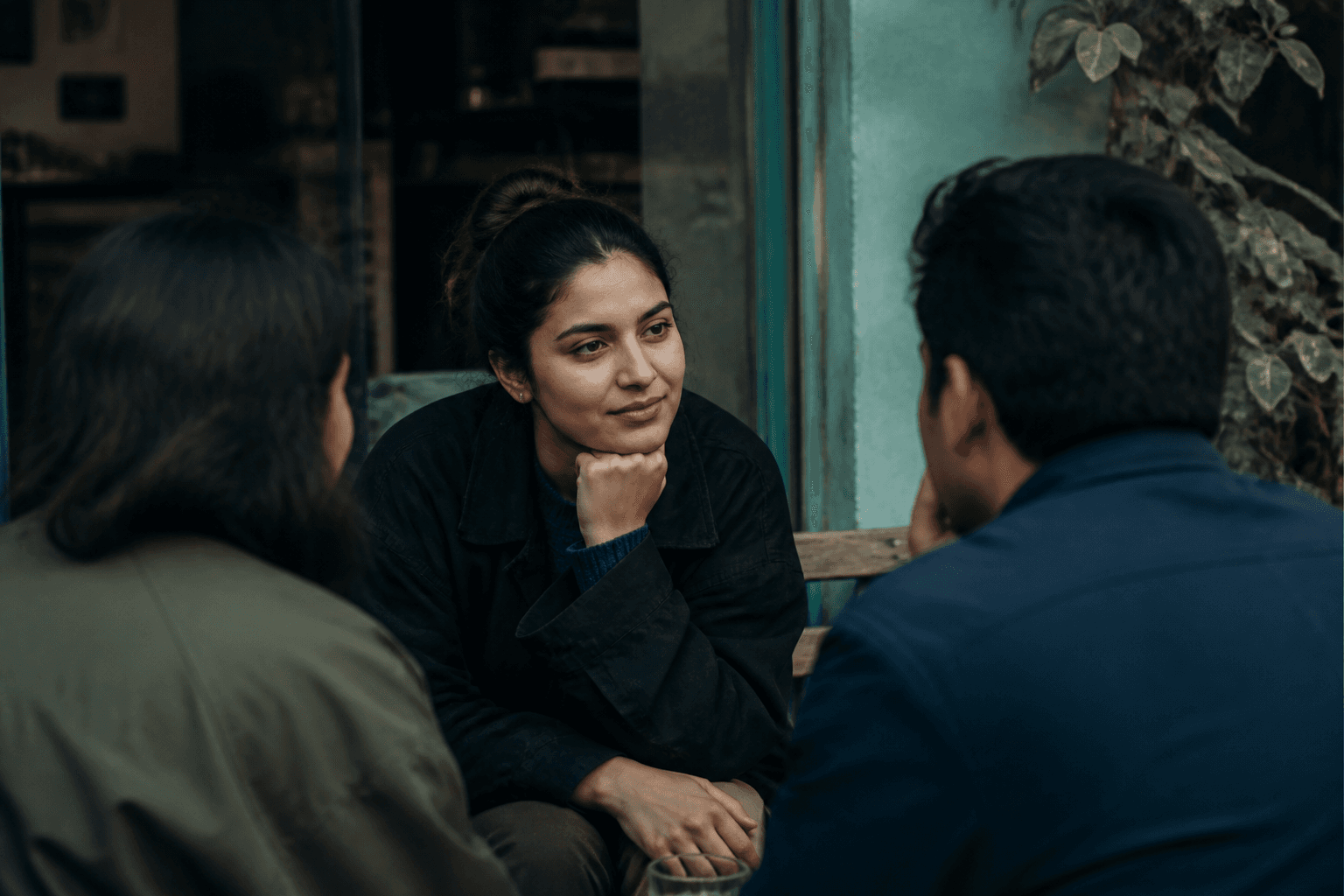
Founder listening to customers in a real-world setting before any shoot
Camera-first habitConversation-first habitWhat improves
Brief opens with visual refsBrief opens with verbatim quotesCreative inherits real language
Shoot then test messagingTest messaging then shootFewer expensive wrong turns
Audience as demographicAudience as people with jobs in placesTargeting gains texture
Objections handled in FAQ laterObjections heard before the scriptAds pre-answer doubt
Location as backdropLocation as research sitePlace becomes strategy-not scenery
If your creative brief cannot quote a living human in their own words, you are not ready for a camera. You are ready for another meeting.

A framework: enter → ask → note → translate → shoot

1. Enter: go where the job already happens

Pick a place your audience already uses. Do not summon them to your office for “feedback.” Enter their context. Your city is full of these rooms and pavements: your city is the most underrated marketing channel. Constraint beats a national listening tour you will never finish.

2. Ask: prefer curiosity over pitch

Lead with their job, not your product. What are you trying to get done here? What almost worked last time? What would you tell a friend to avoid? Soft pitches contaminate the sample. You can invite later. First, earn a clean signal.

3. Note: capture vernacular like a scientist, not a poet

Write their words exactly. Resist the urge to translate into brand voice on the pavement. Translation comes later, carefully. The raw phrase “I just need it not to embarrass me in front of my team” is worth more than three hours of workshopped positioning.

  • Collect ten verbatim lines minimum before drafting creative.
  • Star the lines that surprise you-surprise is usually signal.
  • Note context: weather, queue length, what they were holding.
  • Separate observations from interpretations in your notes.

4. Translate: turn notes into a brief cameras can serve

Now-and only now-shape a brief: the job, the objection, the promise, the proof you can show, the one scene worth filming. If proof is thin, you may need a physical moment before a shoot, because the internet still needs the real world and why the internet still needs the real world both apply when belief is still theoretical.

5. Shoot: manufacture the found story

Production becomes execution of insight, not a search for it. Film the scene that matches the conversation. Keep texture. Prefer humans who sound like the notebook over actors who sound like a deck. Photogenic helps; true helps more-how to create marketing people photograph.

When teams skip listening (and what it costs)

Camera-first feels productive because it produces artefacts quickly. Leadership can see a reel. Conversation-first produces notebooks and awkward truths. Notebooks look less like progress in a Slack channel. They save more money.

The cost of skipping shows up as creative that flatters the brand and misses the job, as ads that raise awareness of a fuzzy promise, as street teams improvising positioning because nobody gave them living language. Footprints without listening are just litter with a logo-good marketing leaves footprints before it leaves impressions still requires the footprint to mean something.

Examples: conversation that changed the shoot

Hospitality brands that listen at the host stand hear different jobs than brands that listen in a boardroom. Fitness brands that talk after a class hear embarrassment and pride in the same sentence. B2B teams that run office hours hear procurement fears that no LinkedIn carousel will invent.

Fictional contrast: “Northline,” a luggage brand. They brief a cinematic airport film about “freedom.” In two hours of conversations at a departures hall, they hear one repeated line: “I just need to know it won’t burst open on the belt.” The shoot changes. Same product. Different job. The resulting creative is less poetic and more believed. People remember the relief-not the tagline. That feeling is the asset: people remember how your brand made them feel, not what it posted.

  1. Schedule listening before creative kick-off as a non-negotiable gate.
  2. Require verbatim quotes in the brief-no quotes, no shoot date.
  3. Map objections to scenes: each major doubt gets a visible answer.
  4. Invite one customer phrase into the primary headline test.
  5. Debrief after the shoot: what still matches the notebook, what drifted into brand fog?

From conversation to street to phone

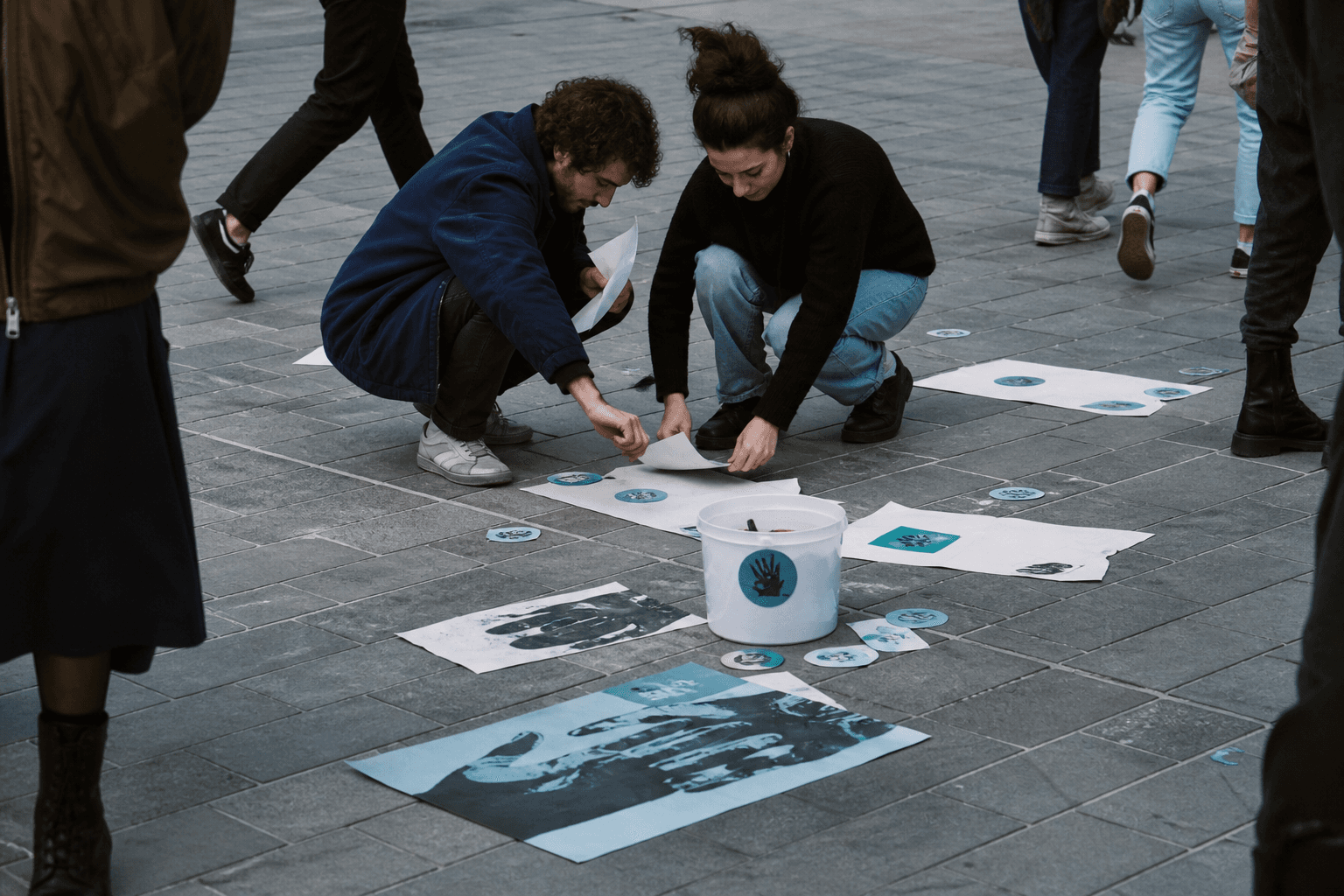
Sometimes the conversation reveals that you need a lived moment before you need a film-a demo, a stall, a clinic. Document that moment; let it travel. Do not end on the pavement: a good street campaign doesn’t end on the street. And do not beg for distribution afterward: people share participation, not ads-people rarely share advertisements-they share stories.

How to measure conversation-first work

Measure whether creative inherited the field: phrase match between ads and notebooks, objection pre-emption rates, qualitative “this is exactly my problem” comments, conversion lifts on lines taken from vernacular versus lines invented in workshops. Also track time-to-insight: days from first conversation to first testable message.

MetricWhat it suggestsTrap to avoid
Verbatim reuse rateWhether listening reached the creativeToken quotes that do not change the brief
Objection pre-emptionWhether doubts were heard earlyHiding hard objections to keep the film pretty
Message test liftWhether found language beats inventedTesting only visuals after locking weak copy
Time from talk to testWhether process is actually conversation-firstMonths of “research” with no decisions
Sales call echoWhether market language matches creativeIgnoring what reps hear weekly

Growth strategies that ignore memory will undervalue this work-most growth strategies ignore the one thing people actually remember. Memorable brands give something worth remembering rather than interrupting louder: memorable brands don’t interrupt-they give something worth remembering.

What research and craft sources are useful for

For interviewing and insight without theatre, Nielsen Norman Group is strong on qualitative methods. Harvard Business Review covers jobs-to-be-done thinking when you want structure without jargon cosplay. SparkToro helps when you need to find where attention already lives before you show up to listen. None replace the awkwardness of asking a stranger a good question.

How this shows up in my work at nau

At nau, campaign work starts with clarity and contact-not with a shot list. I would rather delay a shoot by a week than film the wrong promise beautifully. Conversation is part of the growth system: it feeds positioning, creative, and the physical proofs that make digital cheaper to believe.

How many conversations do we need?

Enough to hear repetition. When the same objection and the same phrase show up without prompting, you have signal. Ten honest talks beat fifty shallow surveys.

What if we already ran research last year?

Markets move. Vernacular moves. A year-old deck is a rumour about the past. Refresh in the wild before you spend on production.

Can we listen online instead?

Support tickets, reviews, and communities help-but they miss embodied context. Pair them with in-person listening when stakes and spend are high.

Won’t this slow the campaign down?

It slows the start and speeds the middle. Reshoots, repositioning mid-flight, and polite failure are slower. Choose your delay.

Put the notebook before the lens

Why should your next campaign begin with a conversation, not a camera? Because belief is built from language people already trust-their own. Listen in the wild. Steal their clarity with permission. Then shoot something that feels inevitable instead of invented.

Want help turning real customer conversations into a campaign brief that is worth filming?

Talk about your growth system

Let the right audience find you, with 10 videos only. That's the progress we build together.

Stefani Dimitrova

Stefani Dimitrova

Organic GTM & Product Storyteller