Content · August 21, 2026

Hot take: the internet still needs the real world

Digital belief is cheaper when something physical made it true first.

Hot take: the internet still needs the real world

Digital belief has become oddly expensive. Not always in media spend-though that too-but in the amount of polish, repetition, and persuasion required to make a stranger take you seriously. Feeds are saturated with competent-looking claims. Competence alone no longer clears the bar.

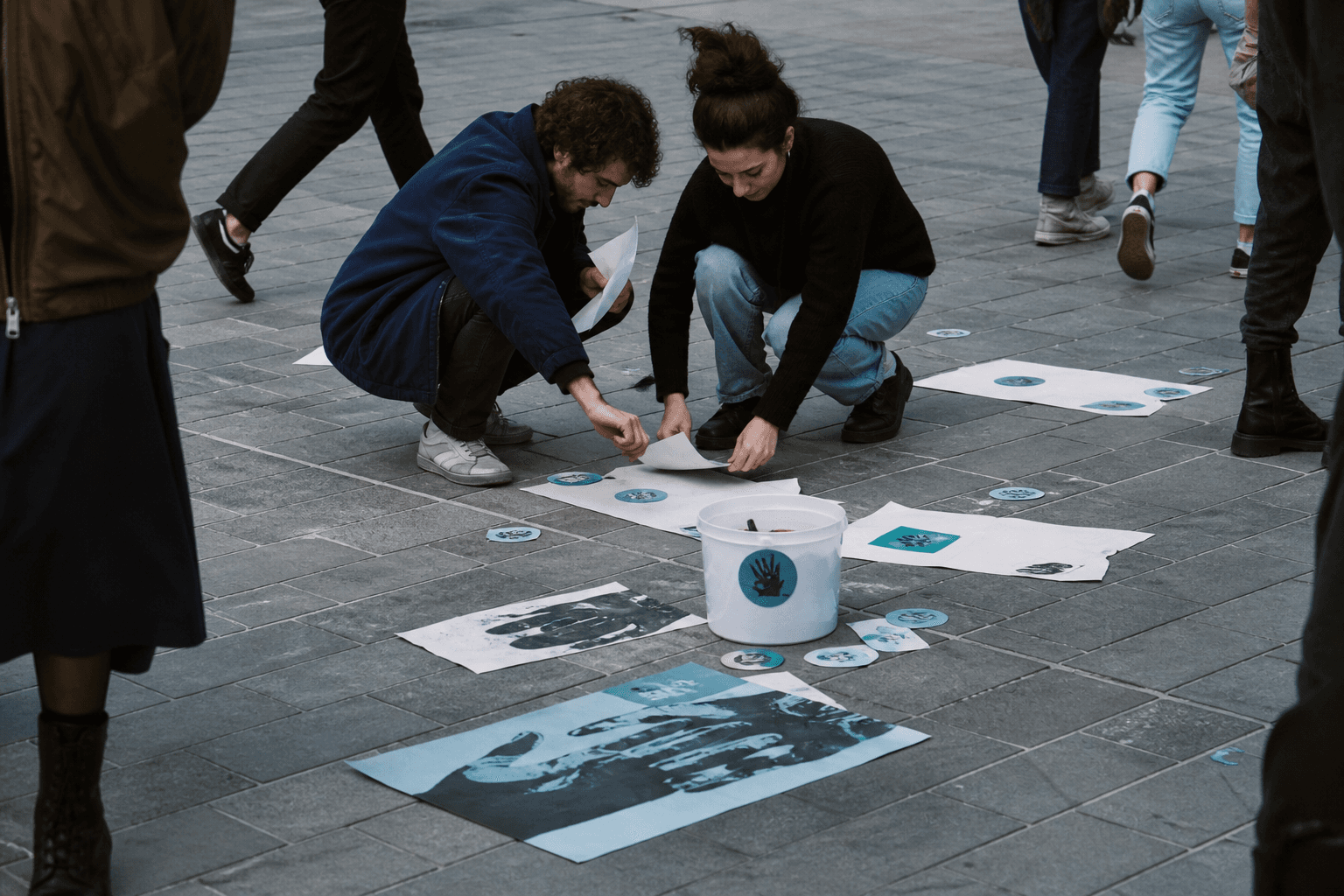
The internet still needs the real world because something physical can make a claim true before the pixels try to. When bodies, places, and inconvenience have already done the hard work of proof, digital marketing stops inventing reality and starts distributing it. Belief gets cheaper. Not free-cheaper.

This is not a rewrite of why the internet still needs the real world, which walks through credibility transfer step by step. This piece is about belief economics: why physical scarcity lowers the cost of digital trust, how digital-native brands borrow gravity from place, and how to treat the real world as infrastructure rather than as a content set.

Why digital belief got so expensive

When everyone can generate a finished-looking brand overnight, finished-looking stops signalling seriousness. Audiences discount ads the way they discount spam-efficiently. You respond by spending more: more creative variants, more influencers, more retargeting, more adjectives. The invoice rises. The prior stays sceptical.

  • Infinite supply of polish collapses the value of polish.
  • Cold claims online require more repetition to approach the same trust warm proof creates once.
  • Suspicion is rational; your job is to lower the cost of belief, not to shout louder at sceptics.
  • Physical constraints-time, place, queue, weather-are costly in ways templates cannot fake cheaply.

I build websites for a living, so this is not nostalgia for high streets. It is unit economics. If your CAC keeps climbing while your story stays abstract, you may not have a media problem. You may have a missing prior. Related: before you spend £10,000 on marketing.

Belief economics: scarcity, cost, and priors

Economics of belief is a useful metaphor. A prior is what someone already assumes before your ad loads. A cold prior (“another startup with nice type”) makes every claim expensive to sell. A warm prior (“I saw them on the corner Saturday; people were waiting”) makes the same claim cheaper. The real world is unusually good at warming priors because it imposes costs that look like commitment.

Scarcity matters. A weekend stall cannot be everywhere. A dinner has a guest list. A stamped map runs out of space. Those limits are features. They tell the network that something happened under constraints, not that a render farm had a free afternoon. For how offline-first sequences work in practice, see the best marketing doesn’t always start behind a screen.

Physical brand presence creating proof that later travels online
Cold digital priorWarm physical priorEffect on belief cost
Claim without witnessClaim with public inconvenience enduredFewer repetitions needed
Stock community imageryNamed place and time people can checkScepticism drops faster
Influencer read in a studioPartner venue or local ritualTrust transfers with less spend
Metric screenshot aloneMetric plus scene of humansNumbers feel earned
Always-on ads inventing desireAds reminding people of contactCreative works as memory, not fiction
Digital belief is cheaper when something physical made it true first. The feed is a distribution layer. The world is still the factory floor.

A framework: anchor → compress → price → recycle

1. Anchor: attach the brand to a checkable place

An anchor is a location, ritual, or recurring public commitment someone could falsify. Office hours on Thursdays. A market stall with a real address. A clinic in a partner office. Anchors do not need to be large. They need to be specific. Your city is often the cheapest anchor you are ignoring: your city is the most underrated marketing channel.

2. Compress: turn contact into dense proof

Contact creates raw material. Compression turns it into artefacts that fit a feed without bleaching the truth: short clips with imperfect audio, photos with weather and elbows, quotes with first names and permission. Compression is not the same as sterilisation. Keep the texture that made the moment expensive to fake.

3. Price: spend digital budget as reminder, not invention

Once the prior is warm, paid and owned channels change job. They remind, extend, and invite the next contact. They stop trying to conjure seriousness from typography. That is where media efficiency usually hides-not in a clever bid strategy alone, but in a cheaper story to sell.

4. Recycle: let proof compound across cycles

Each physical cycle should leave residue online: a growing library of receipts near CTAs, not a one-off “launch event” buried in a forgotten album. Street moments that never reach the phone waste infrastructure; design the bridge: a good street campaign doesn’t end on the street.

Digital-native brands and the gravity problem

Purely online brands often feel light. That can be charming until purchase risk rises. Then lightness reads as vapour. Physical gravity-packaging you can hold, a temporary shop, a founder dinner, a service moment in public-adds mass. Mass is what makes later content land with less persuasion.

This is why some DTC brands look “better at Instagram” after they open a store, and why B2B webinars convert harder after a sharp in-person summit. The algorithm did not suddenly become generous. The brand acquired mass. Footprints precede impressions when you do this well: good marketing leaves footprints before it leaves impressions.

What physical does that pixels still cannot

  1. Impose mutual inconvenience-the strongest cheap signal of seriousness.
  2. Create witnesses who can contradict or confirm you later.
  3. Generate sensory detail that survives scepticism better than adjectives.
  4. Produce artefacts people photograph without being asked-see how to create marketing people photograph.
  5. Warm the prior so the next click feels like continuation, not a cold open.

None of this means every brand needs a parade. It means every brand that sells online should ask where belief is manufactured, not only where it is measured. If you only manufacture belief in tools that also manufacture forgery, you will keep paying forgery’s tax.

Examples: belief that arrived pre-paid

Retail as marketing infrastructure (not merely distribution) is the classic case: touch reduces uncertainty ads cannot. Community rituals-training clubs, tasting calendars, open workshops-do the same for smaller brands. Even a single well-run Saturday can change the temperature of a month of ads.

Fictional contrast: “Ledgerly,” a finance app for freelancers. They run polished explainers for a quarter. Demo no-shows stay high; trust objections dominate calls. They host three evening clinics in a co-working space with an accountant partner, stamp attendees’ notebooks, film two imperfect reaction clips with consent, and place those beside the homepage CTA. Ad creative shifts from “revolutionary clarity” to “Thursday at Forge, desk three.” Same product. Lower cost per believed click.

Start with listening, not with a set

Physical infrastructure fails when it is theatre for a camera. Begin with conversations in the wild-objections, vernacular, jobs people are already doing in a place. Shoot later. Listen first: why your next campaign should begin with a conversation, not a camera. A walk still beats a mood board: your next marketing campaign should start with a walk.

How to measure cheaper belief

Look for falling persuasion burden: shorter time-to-trust in sales calls, higher show-up rates after exposure to lived proof, lower frequency needed for the same conversion, more unprompted “I saw you at…” mentions. Vanity impressions can rise while belief cost stays high. Do not confuse the two.

MetricWhat it suggestsTrap to avoid
Cost per warm conversationWhether proof is efficientCounting footfall as belief
Ad frequency to convertWhether prior is warmingScaling spend before proof exists
“I saw you / I was there” mentionsWhether anchors are workingIgnoring qualitative language
Demo show-up after proof exposureWhether digital is reminder vs inventionAttributing everything to the last click
Creative specificity scoreWhether artefacts are entering adsReturning to generic stock after one event

People still share what they were part of more readily than what they were sold-people rarely share advertisements-they share stories-and the best marketing still doesn’t ask people to share it. Feeling remains the residue that outlives the post: people remember how your brand made them feel, not what it posted.

What research is useful for

For trust, risk, and how experience shapes judgement, Harvard Business Review and Nielsen Norman Group remain practical. Eventbrite’s blog documents live formats when you filter for substance. Campaign is useful for activations that left more than a hashtag. None replace standing where your customers already stand.

How this shows up in my work at nau

At nau I treat physical proof as part of the growth system, not as a seasonal stunt. Websites convert better when they sit on top of reality. Ads waste less when they remind. If you want the transfer mechanics in more detail, read the companion essay why the internet still needs the real world. If you want memorable presence over interruption, start with memorable brands don’t interrupt-they give something worth remembering.

Isn’t this just “do events”?

No. Events are one form of anchor. The point is checkable commitment that warms the prior-clinics, stalls, rituals, service in public. Spectacle is optional. Specificity is not.

What if our audience is global and sparse?

Use denser micro-anchors: dinners in key cities, partner venues, rotating office hours, pop-ups timed to existing gatherings. Sparse does not mean bodiless.

How much physical proof is enough before we buy ads?

Enough that creative can show receipts instead of adjectives. One honest cycle beats a year of inventing vibes-then amplify.

How is this different from credibility-transfer articles?

Transfer explains how proof moves from pavement to page. Belief economics explains why that sequence lowers the cost of digital trust. You want both: method and motive.

Make the cheap thing true first

The internet still needs the real world because the feed is a brilliant amplifier and a mediocre forge. Forge belief where forgery is expensive. Then let pixels do what they do best: carry a true story farther than your feet can-at a price your CAC can live with.

Want help building physical proof that makes your digital marketing cheaper to believe?

Talk about your growth system

Let the right audience find you, with 10 videos only. That's the progress we build together.

Stefani Dimitrova

Stefani Dimitrova

Organic GTM & Product Storyteller